




 Case studies
 AeGiS: the urban architecture revolution powered by robotic LFAM

June 2026
AeGiS: the urban architecture revolution powered by robotic LFAM
June 2026

The Additive Eco-engineered Green Insulating Structures (AeGiS) project develops high-performance modular green panels conceived as active components for building envelopes and urban infrastructure. The 2×2 m modules can be installed on façades or configured as self-supporting urban shelters, contributing to the mitigation of the Urban Heat Island (UHI) effect and improving thermal insulation performance.
Modular green infrastructures against urban heat islands
The geometries, developed through computational design by RD-29, maximize active surface area, water retention, and natural ventilation, integrating embedded irrigation systems through an ecodesign-driven approach focused on environmental performance, modularity, and lifecycle optimization. The result is a modular, scalable, and technologically advanced solution that combines materials engineering, additive manufacturing, sustainability, and circular design methodologies into a single system for next-generation urban architecture.
AeGiS is part of the European DeremCo project and involves Caracol collaborating with innovation leaders, such as FiberEUse Tech, RD-29 as Ecodesign/LCA expert and project’s applicant, Slovenian Faculty of Polymer Technology, and Politecnico di Milano, with the goal of valorizing recycled composites and optimizing environmental performance throughout the product lifecycle.
How robotic LFAM can regenerate the urban landscape
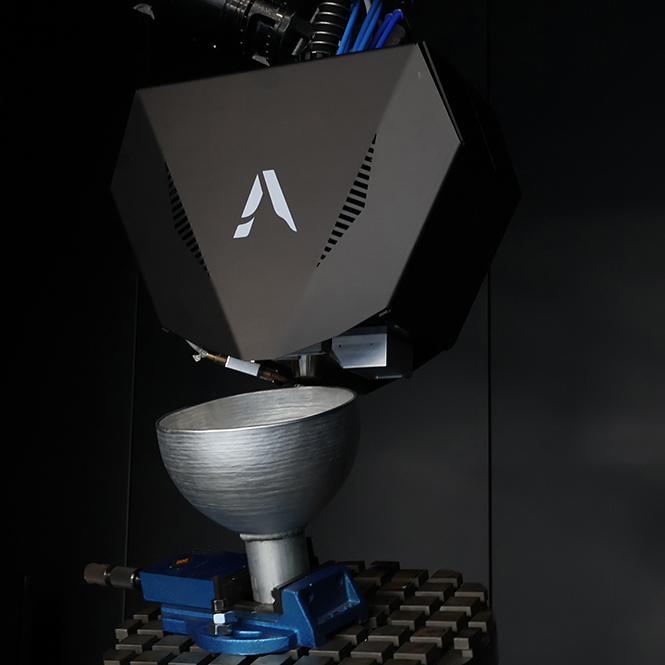
The technological enabler behind AeGiS is Caracol’s robotic LFAM platform, Heron AM, developed to manufacture the panels through advanced large-scale additive manufacturing processes. More than a robotic extrusion system, Heron AM is a fully integrated ecosystem combining proprietary hardware, software, advanced process control, and extensive material expertise.
At the core of Caracol’s approach is the commitment to enabling more sustainable manufacturing workflows by integrating recycled and recyclable materials into industrial production processes. This vision played a key role in the AeGiS project, where Heron AM successfully processed an innovative composite material designed to combine structural performance with environmental responsibility.
Caracol’s Application Engineering and R&D Materials teams managed the DfAM development, prototyping, and qualification of a composite based on rPETG reinforced with 20% recycled glass fiber (rGF), developed within the DeremCo project using end-of-life wind turbine blades. The integration of robotic LFAM, advanced process control, and sustainable materials enabled the production of high-performance architectural components while significantly reducing waste and raw material consumption, demonstrating the potential of circular composites for next-generation urban architecture.
DeremCo: enabling circularity in composite materials
AeGiS was launched through the first Open Call of the European project DeremCo (DE & REMANUFACTURING for Circular Economy Investments in the Composite Industry). This initiative brings together 30 partners across seven countries to develop a systemic, demand-driven solution for reusing end-of-life composite materials in high-value applications.
Through pilot mechanical and thermo-chemical demanufacturing processes combined with a demand-driven approach, DeremCo aims to transform the composite value chain into a circular, investment-ready system that fosters more sustainable industrial practices. After more than three years of development, the project is expected to conclude by summer 2026, representing a potential turning point for accelerating the industrial adoption of circular composite materials and scaling sustainable manufacturing practices across multiple sectors.
Within this vision, Caracol’s Heron AM ecosystem acts as the catalyst for circular innovation, while RD-29 contributes the environmental design methodology and lifecycle-oriented development approach that guide the integration between sustainability targets, architectural performance, and manufacturing feasibility. By converging hardware, software, and material science into a unified workflow, Caracol transforms recycled composites into qualified, high-performance solutions—turning the promise of upcycling into a scalable reality for next-generation urban environments.
This project has received funding from the European Union’s ERDF under grant agreement No 101084037. Views and opinions expressed are however those of the author(s) only and do not necessarily reflect those of the European Union or the European Innovation Council and SMEs Executive Agency (EISMEA). Neither the European Union nor the granting authority can be held responsible for them.
Ready to unlock your next architectural project?
LFAM FOR THE AUTOMOTIVE INDUSTRY
Discover how to use Caracol’s large-scale 3D printing technology for your automotive applications. Register here to download the whitepaper.
Related Case Studies
Check out our success stories
-
Case studies. JOME Engineering builds 3D printed UAE’s first marine propeller in Dubai
-
Case studies. How Cross Industry Dynamics Turned a Video Game Dragon Into an 8.5-Foot Trade Show Centerpiece with robotic LFAM
-

Case studies. The Microfactory Behind Justin Bieber’s SKYLRK Seating at Coachella 2026
-

Case studies. From sketch to show floor: how Cross Industry Dynamics delivered a custom hypercar prototype in just two weeks
-

Case studies. Client Talks with ITS for Sustainable Mobility and Aerospace/Mechatronics | Robotic LFAM for Education
-

Case studies. Duondolo: when robotic LFAM sets creativity freedom
-

Case studies. Eligio Re Fraschini explores the future of aerospace tooling with robotic metal AM
-

Case studies. NP Aerospace produces Mastiff suspension & differential carrier with Caracol’s Vipra AM technology
-

Case studies. Client Talks with Formes et Volumes | Robotic LFAM for Jigs and Molds
-

Case studies. Formes et Volumes chose robotic LFAM to produce composite lamination tools for aerospace
-

Case studies. Client Talks with Ferretti Group | robotic LFAM for custom luxury yachts
-

Case studies. From digital to track: mold-free sports car roof powered by robotic LFAM technology
-

Case studies. Client Talks with V2 Group | Robotic LFAM for Custom Marine Applications
-

Case studies. From tooling-driven constraints to robotic LFAM: engineering the next generation of marine stern structures
-

Case studies. A new era of custom luxury yachts, powered by robotic LFAM
-

Case studies. “among-all” by Patricia Urquiola turns LFAM imperfection into design intent
-

Case studies. Proto21 leveraged Heron AM to 3D print a full-scale Seaglider mockup for REGENT Craft in UAE
-

Case studies. Caracol’s LFAM technology drives the production of a Next-Generation Stratospheric Gondola
-

Case studies. JOME Engineering unlocked metal additive production of sampling valves with Vipra AM
-

Case studies. THE CAB – The first 3D-printed RV made from recycled polymer
-

Case studies. Ono Chair – the harmony of the whole with 3D printing
-

Case studies. DeltaPrint3D innovate the retail design sector with 3D printed rock textured columns
-

Case studies. Recarlo leverages LFAM in redefining its luxury retail experience
-

Case studies. Optimizing custom Legend Car bodywork production with Heron AM – Castelletto Circuit
-

Case studies. World’s Largest 3D Printed Architectural Structure built in Dubai by Proto21 with Heron AM
-

Case studies. LFAM redefines construction industry, starting with custom column formwork
-

Case studies. AM Unique transforms the desert into a Design Hub: furniture manufacturing with Heron AM
-

Case studies. Reimagining construction: advanced robotic LFAM at Biennale Architettura 2025
-

Case studies. PORTAL – A new era of furniture powered by Advanced Manufacturing
-

Case studies. Sangiorgio Marine redefines yacht superstructures production with LFAM
-

Case studies. Applying robotic LFAM in the production of Pershing GTX116 aerodynamic grilles
-

Case studies. Duqueine Automotive Set New Standards in Racing Car Development
-

Case studies. The first functional monolithic catamaran additively produced with V2 Group
-

Case studies. Gosper lamp: leveraging robotic LFAM technology to create stunning lighting design
-

Case studies. Stacked modules: 3D printing meets craftsmanship to redefine furniture production
-

Case studies. Alstom redefines the production of simulator driver desks with LFAM
-

Case studies. 3D-printed 1:5 nose mock-up for Alstom
-

Case studies. Shaping the manufacturing of industrial tooling with large format 3D printing
-

Case studies. Custom Conveyor Screw for Industrial Machinery
-

Case studies. Multi-Material Neck Flange for the Oil & Gas Industry
-

Case studies. Vipra AM in Marine Propeller Manufacturing
-

Case studies. High-Precision Autoclave Cure Tools for Aerospace
-

Case studies. 3D printing piping for the energy industry
-

Case studies. The first 3D printed ISO certified marine gangway
-

Case studies. Robotic 3D printing of custom design furniture
-

Case studies. Van Venrooy and Caracol 3D print end-parts for automotive custom vehicles
-

Case studies. Bringing LFAM to industrial production for advanced applications in the automotive sector
-

Case studies. LFAM aerospace composite parts fly high with 3D printed autoclave molds
-

Case studies. How large 3D printed mock-ups can accelerate the automotive industry
-

Case studies. 3D printed tools for aircraft manufacturing
-

Case studies. Caracol working to bridge the gap on sustainable manufacturing
-

Case studies. Pressurized Tanks for Space with WAAM
-

Case studies. 3D printed autoclave cure tooling for the automotive industry
-

Case studies. Wind Blades’ Lamination Tooling
-

Case studies. 3D printed sailboat hull with recycled materials
-

Case studies. 3D printed interiors for a luxury architectural landmark
-

Case studies. Large-scale 3D printed totem for Yamamay HQ
-

Case studies. Valentino Rossi gets giant 3D printed helmet from Caracol AM
-

Case studies. Upcycling and large-format 3D printing for sustainable architecture
-

Case studies. The first fully 3D printed robotic bar installation