




 Case studies
 JOME Engineering builds 3D printed UAE’s first marine propeller in Dubai

October 2026
JOME Engineering builds 3D printed UAE’s first marine propeller in Dubai
October 2026

With no drawings and no time to wait for a foundry, JOME Engineering scanned an existing propeller and printed a working replacement in Dubai, close to the vessel it was built for. Made in SS316L on Caracol’s Vipra AM, the part cut lead time by about 60% and cost by about 40%.
When the only blueprint is the part itself
When JOME’ client came looking for a marine propeller rebuilt to match an existing part, the request came with an added complication. It had to be delivered fast, and it arrived with no CAD files, no tooling to work from. Everything that defined the propeller, from blade curvature to pitch to the way each blade blends into the hub, lived only in the physical part itself. The geometry had to be recovered before it could ever be reproduced.
Since casting would have meant cutting a new die and then waiting weeks, and there wasn’t time for either. JOME Engineering chose the additive route instead. The team 3D-scanned the original to create a digital master, then printed the propeller in metal on Vipra AM, Caracol’s robotic WAAM platform for large, complex parts. The work was carried out in JOME’s facility in Dubai, close to the vessel the propeller was going back on.
From scan to finished propeller: the build and what it delivered
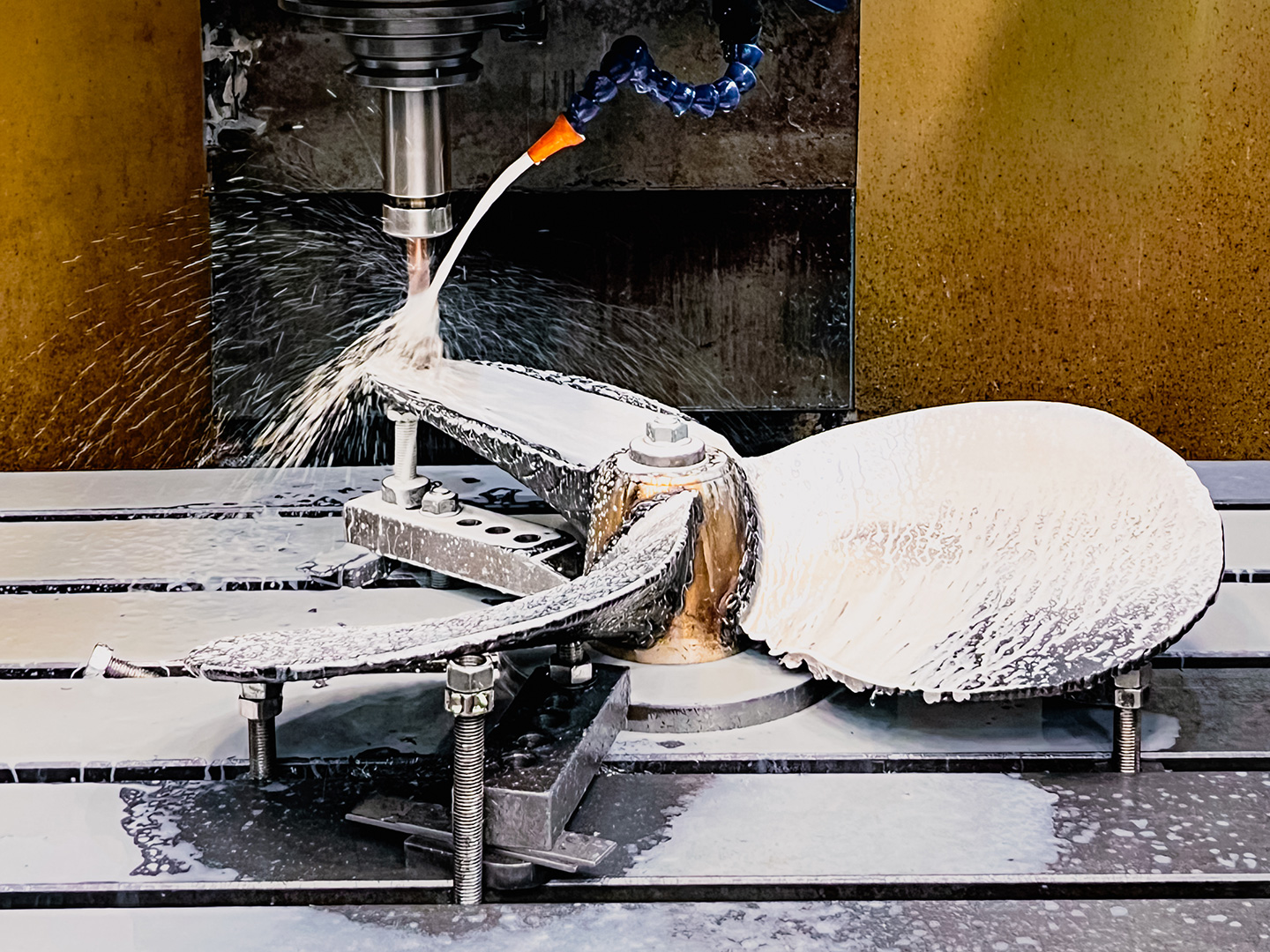
The team built the propeller section by section to keep tighter control over the outcome. The central boss went first, it was machined to precision- once it had passed a dye penetrant inspection confirming there were no cracks or porosity, the three blades were printed on top of it. Machining then turned out to be the demanding stage, running to roughly 100 hours, largely because a blade is a twisted freeform surface with barely any usable datum, so aligning the part stayed difficult even with setting pointers in place.
To manage that risk, the team re-scanned the part at each stage, checking both that the geometry still tracked the master and that enough stock remained to keep cutting. The build closed out with a hand grind, a pitch verification and a final round of balancing. The re-scans also gave JOME a documented record of the part at every stage.
Technical specs
- Technology: Vipra AM – XP model
- Material: SS316L
- Final Weight: 26 kg
- Diameter: 685 mm
- Print time: 20 hrs
- Machining time: 100 hrs
The additive route really paid off on the numbers that matter to JOME Engineering:
- Lead time dropped by around 60%, since there was no die to cut and no foundry queue to wait through, so the vessel got back into service sooner.
- Cost came down by roughly 40%, because tooling is the single biggest fixed expense on a one-off cast propeller, and with a single part there’s no production run to spread it across.
Additionally, JOME now owns the propeller’s geometry as a digital file. If the part is damaged again, the next one goes straight to printing without a new scan.
Sustainability is part of the picture too. WAAM melts only the wire it deposits and needs no steel die, which lowers the CO2 footprint of a one-off part like this propeller.
Rethinking how marine spares get made
What the propeller shows is where metal 3D printing makes the difference: capturing a part that only exists physically and rebuilding it faster and more cheaply than casting could manage. Reverse engineering and WAAM make a natural pairing. The scan recovers what the drawings never held, and Vipra AM reproduces it with no die in sight, keeping the buy-to-fly ratio tight and the lead time short.
Deposition took only a small slice of the total effort (20 of roughly 120 hours), while machining and finishing carried most of the load, which is the usual shape of any precision metal part. For JOME Engineering, the result was a balanced, ready-to-run propeller delivered on time and on budget in Dubai. For Caracol, it adds a SS316L part back in service at sea to Vipra AM’s track record in marine applications.
Ready to unlock your next marine project?
LFAM FOR THE AUTOMOTIVE INDUSTRY
Discover how to use Caracol’s large-scale 3D printing technology for your automotive applications. Register here to download the whitepaper.
Related Case Studies
Check out our success stories
-

Case studies. How Cross Industry Dynamics Turned a Video Game Dragon Into an 8.5-Foot Trade Show Centerpiece with robotic LFAM
-

Case studies. The Microfactory Behind Justin Bieber’s SKYLRK Seating at Coachella 2026
-

Case studies. From sketch to show floor: how Cross Industry Dynamics delivered a custom hypercar prototype in just two weeks
-

Case studies. Client Talks with ITS for Sustainable Mobility and Aerospace/Mechatronics | Robotic LFAM for Education
-

Case studies. Duondolo: when robotic LFAM sets creativity freedom
-
Case studies. AeGiS: the urban architecture revolution powered by robotic LFAM
-
Case studies. Eligio Re Fraschini explores the future of aerospace tooling with robotic metal AM
-

Case studies. NP Aerospace produces Mastiff suspension & differential carrier with Caracol’s Vipra AM technology
-

Case studies. Client Talks with Formes et Volumes | Robotic LFAM for Jigs and Molds
-

Case studies. Formes et Volumes chose robotic LFAM to produce composite lamination tools for aerospace
-

Case studies. Client Talks with Ferretti Group | robotic LFAM for custom luxury yachts
-
Case studies. From digital to track: mold-free sports car roof powered by robotic LFAM technology
-

Case studies. Client Talks with V2 Group | Robotic LFAM for Custom Marine Applications
-

Case studies. From tooling-driven constraints to robotic LFAM: engineering the next generation of marine stern structures
-

Case studies. A new era of custom luxury yachts, powered by robotic LFAM
-

Case studies. “among-all” by Patricia Urquiola turns LFAM imperfection into design intent
-

Case studies. Proto21 leveraged Heron AM to 3D print a full-scale Seaglider mockup for REGENT Craft in UAE
-
Case studies. Caracol’s LFAM technology drives the production of a Next-Generation Stratospheric Gondola
-

Case studies. JOME Engineering unlocked metal additive production of sampling valves with Vipra AM
-
Case studies. THE CAB – The first 3D-printed RV made from recycled polymer
-

Case studies. Ono Chair – the harmony of the whole with 3D printing
-

Case studies. DeltaPrint3D innovate the retail design sector with 3D printed rock textured columns
-

Case studies. Recarlo leverages LFAM in redefining its luxury retail experience
-

Case studies. Optimizing custom Legend Car bodywork production with Heron AM – Castelletto Circuit
-

Case studies. World’s Largest 3D Printed Architectural Structure built in Dubai by Proto21 with Heron AM
-

Case studies. LFAM redefines construction industry, starting with custom column formwork
-

Case studies. AM Unique transforms the desert into a Design Hub: furniture manufacturing with Heron AM
-

Case studies. Reimagining construction: advanced robotic LFAM at Biennale Architettura 2025
-

Case studies. PORTAL – A new era of furniture powered by Advanced Manufacturing
-

Case studies. Sangiorgio Marine redefines yacht superstructures production with LFAM
-

Case studies. Applying robotic LFAM in the production of Pershing GTX116 aerodynamic grilles
-

Case studies. Duqueine Automotive Set New Standards in Racing Car Development
-
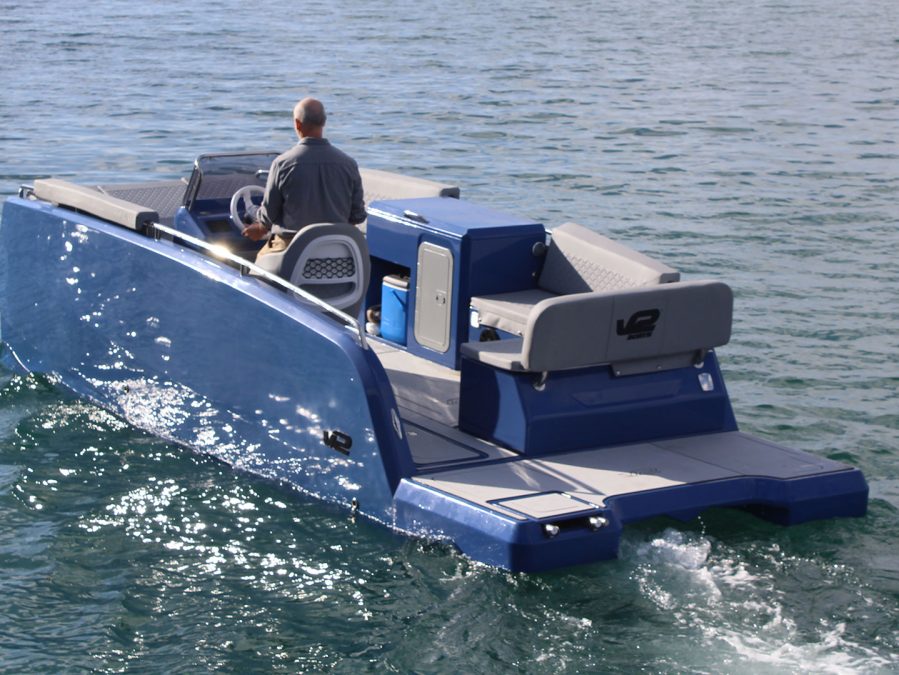
Case studies. The first functional monolithic catamaran additively produced with V2 Group
-

Case studies. Gosper lamp: leveraging robotic LFAM technology to create stunning lighting design
-

Case studies. Stacked modules: 3D printing meets craftsmanship to redefine furniture production
-

Case studies. Alstom redefines the production of simulator driver desks with LFAM
-

Case studies. 3D-printed 1:5 nose mock-up for Alstom
-
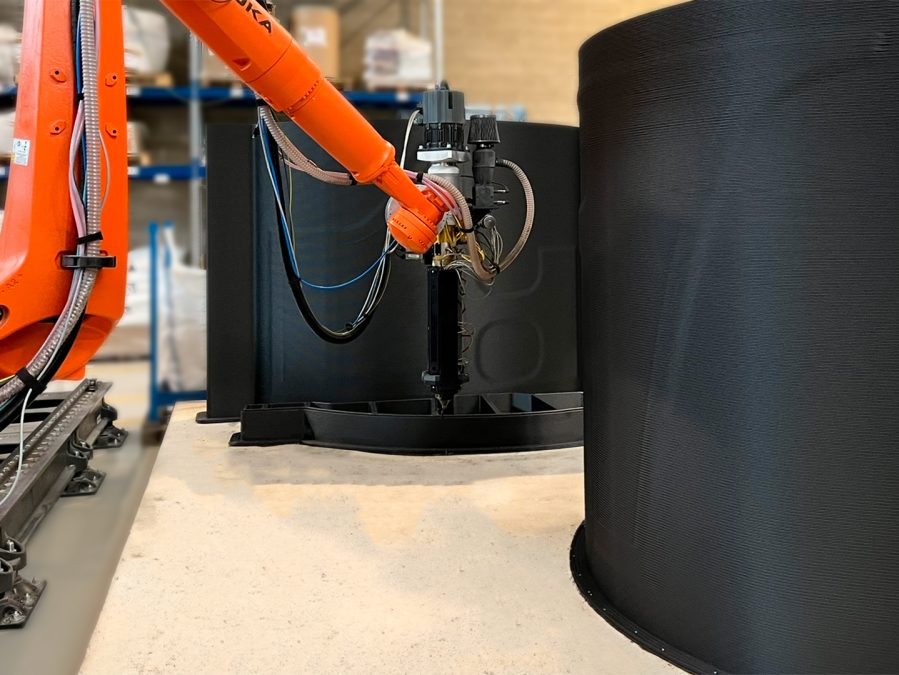
Case studies. Shaping the manufacturing of industrial tooling with large format 3D printing
-
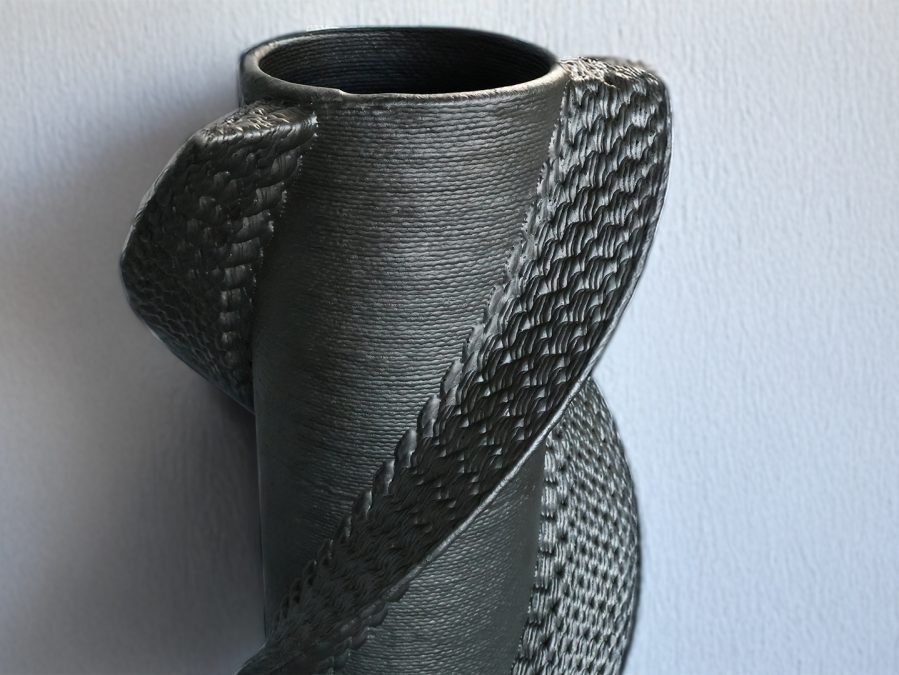
Case studies. Custom Conveyor Screw for Industrial Machinery
-
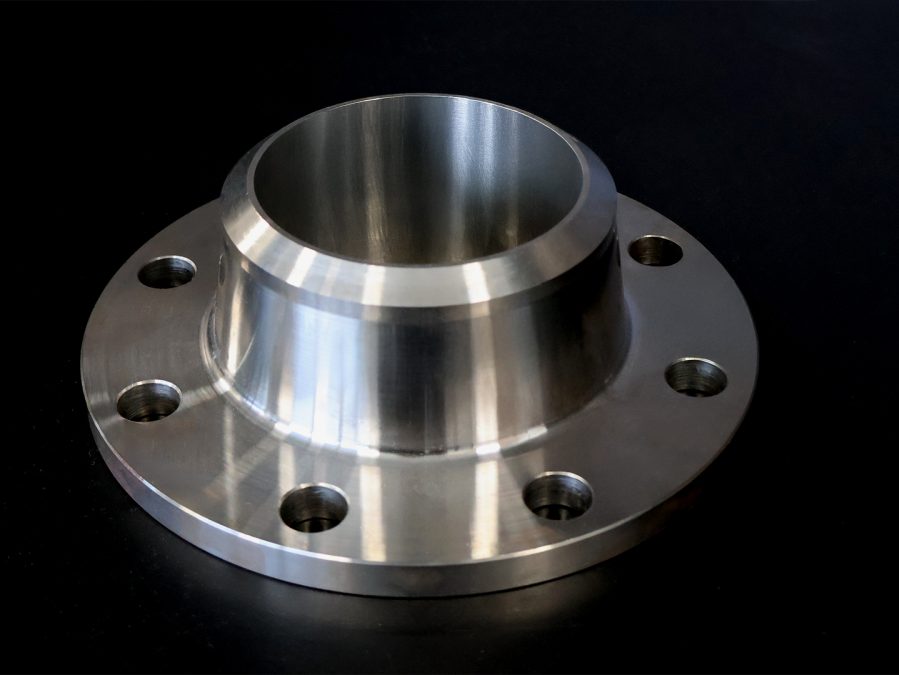
Case studies. Multi-Material Neck Flange for the Oil & Gas Industry
-
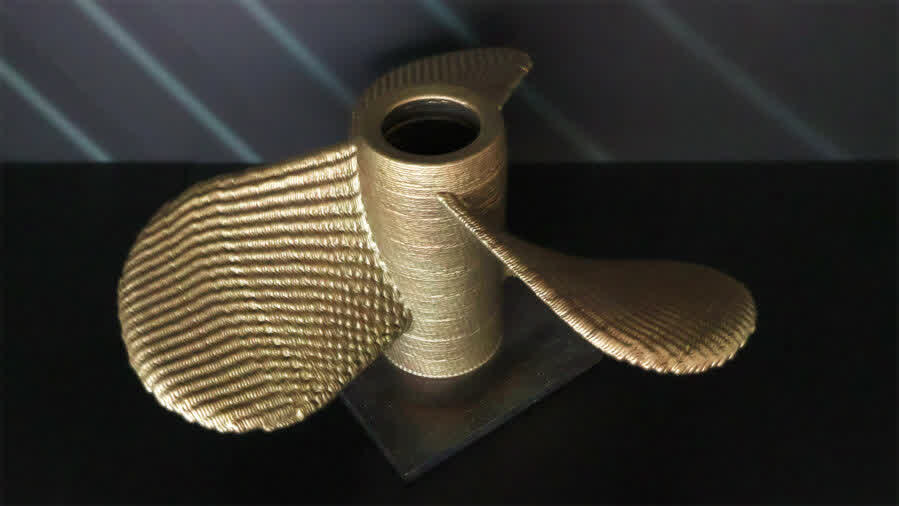
Case studies. Vipra AM in Marine Propeller Manufacturing
-
Case studies. High-Precision Autoclave Cure Tools for Aerospace
-

Case studies. 3D printing piping for the energy industry
-

Case studies. The first 3D printed ISO certified marine gangway
-
Case studies. Robotic 3D printing of custom design furniture
-

Case studies. Van Venrooy and Caracol 3D print end-parts for automotive custom vehicles
-

Case studies. Bringing LFAM to industrial production for advanced applications in the automotive sector
-

Case studies. LFAM aerospace composite parts fly high with 3D printed autoclave molds
-
Case studies. How large 3D printed mock-ups can accelerate the automotive industry
-

Case studies. 3D printed tools for aircraft manufacturing
-

Case studies. Caracol working to bridge the gap on sustainable manufacturing
-

Case studies. Pressurized Tanks for Space with WAAM
-

Case studies. 3D printed autoclave cure tooling for the automotive industry
-

Case studies. Wind Blades’ Lamination Tooling
-

Case studies. 3D printed sailboat hull with recycled materials
-

Case studies. 3D printed interiors for a luxury architectural landmark
-

Case studies. Large-scale 3D printed totem for Yamamay HQ
-

Case studies. Valentino Rossi gets giant 3D printed helmet from Caracol AM
-

Case studies. Upcycling and large-format 3D printing for sustainable architecture
-

Case studies. The first fully 3D printed robotic bar installation