




 Knowledge Hub
Spare Parts Additive Manufacturing: The Warehouse Goes Digital

November 2026
Spare Parts Additive Manufacturing: The Warehouse Goes Digital
November 2026
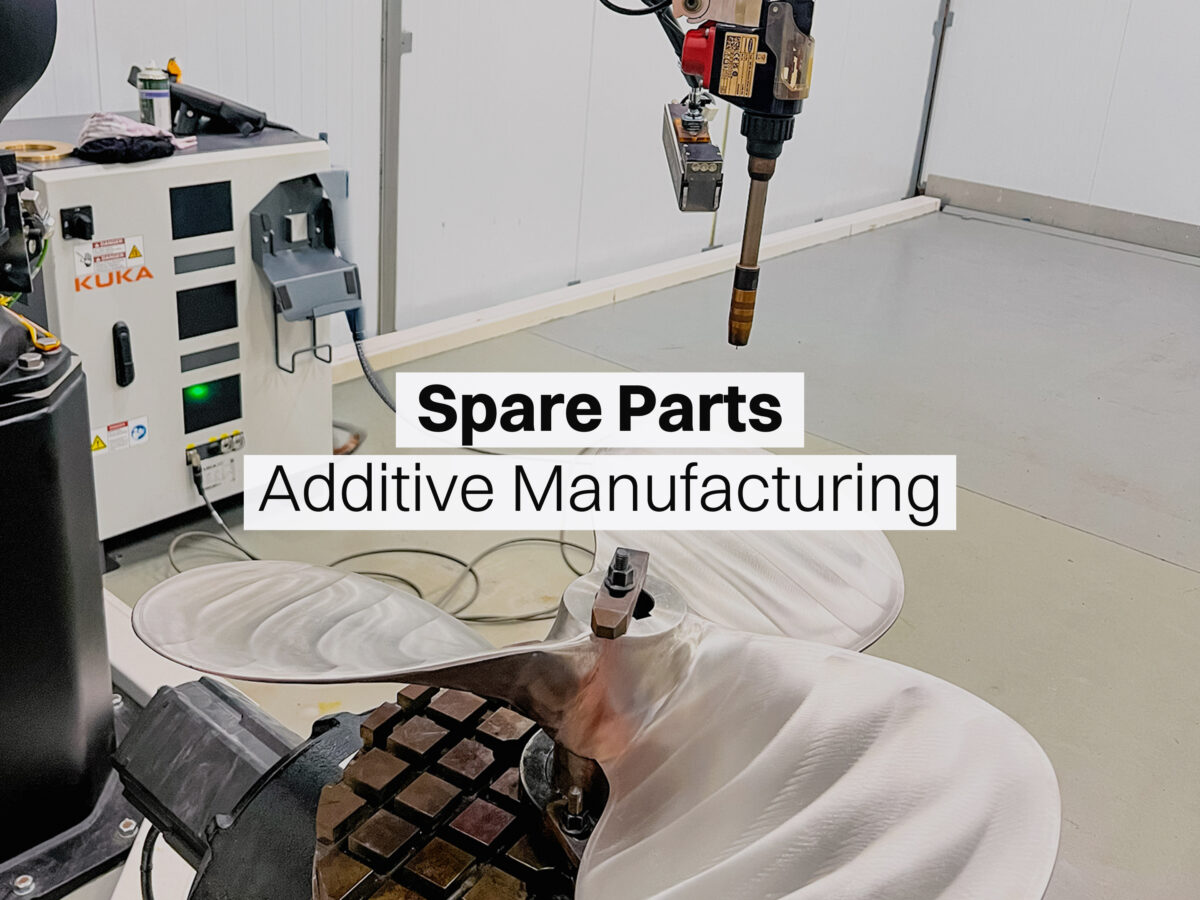
Spare parts additive manufacturing moves part of the inventory from shelves to digital files, so components get produced only when they’re needed. Industry leaders already rely on it for large, high-value parts, with lead times cut by half or more and lower production costs. Here’s how the workflow runs, where LFAM and WAAM fit, and why distributed networks are where additive manufacturing in the spare parts supply chain is heading.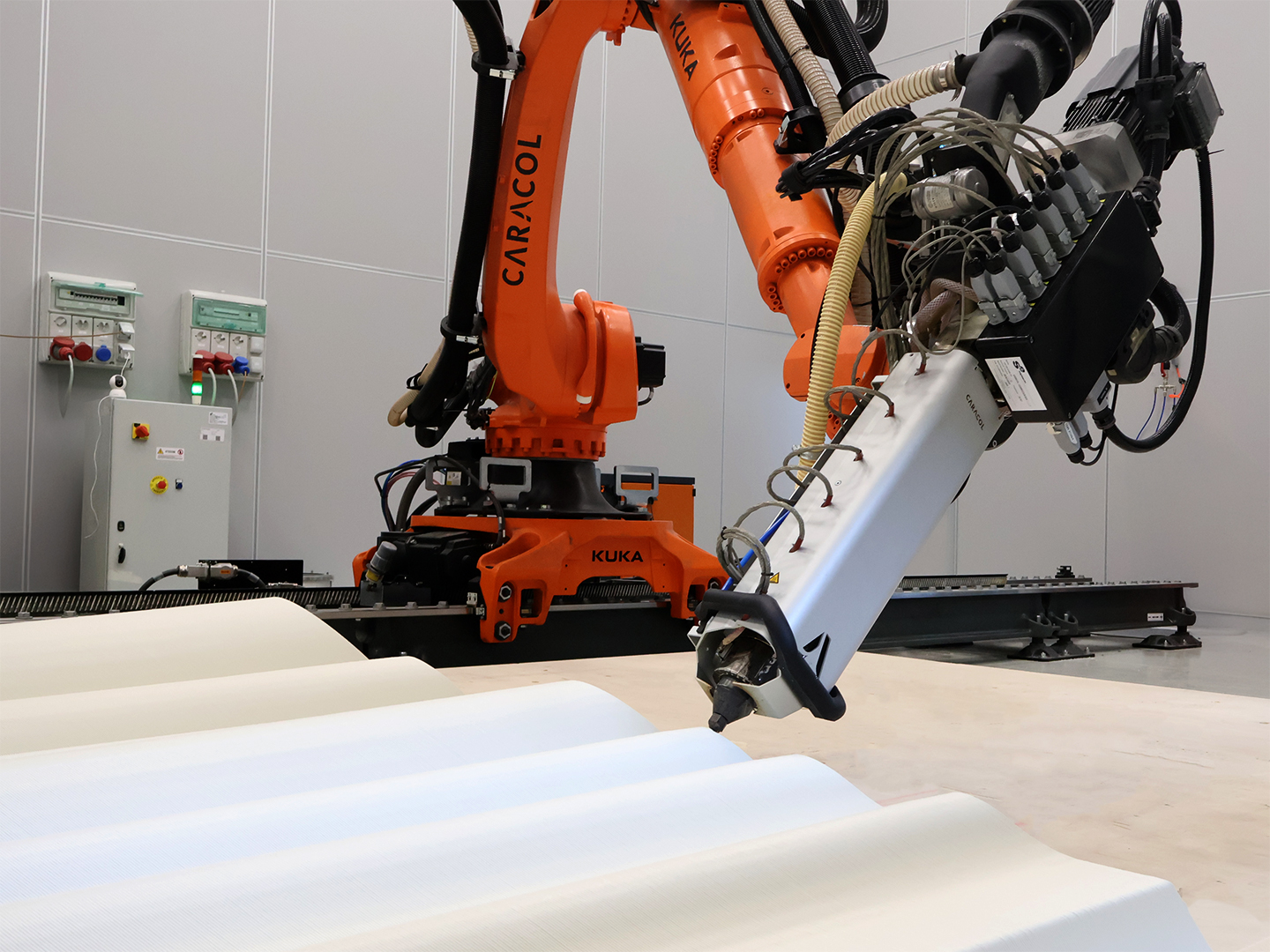
Why traditional production struggles with spare parts
Spare parts have an odd demand profile. A component might be ordered twice in one year, then not again for three, and the equipment it belongs to can stay in service for decades. Casting, forging and injection molding were built around the opposite situation, with stable volumes and tooling paid off over thousands of pieces. When series production stops, the molds end up in storage, if they’re lucky, and the aftermarket team is left with a final batch sized on a forecast that nobody really trusts.
Rail operators know this better than most, because rolling stock lasts a long time. At Deutsche Bahn some locomotive parts used to take an average of ten months to arrive from the manufacturer, and while you wait for a part like that the vehicle is parked. Downtime ends up costing far more than the part ever did.
This is where additive manufacturing spare parts start to make sense. Since the part is built directly from a digital model, there’s no tooling to amortize and the unit cost barely changes between one piece and ten, which is exactly the range most long-tail spares live in.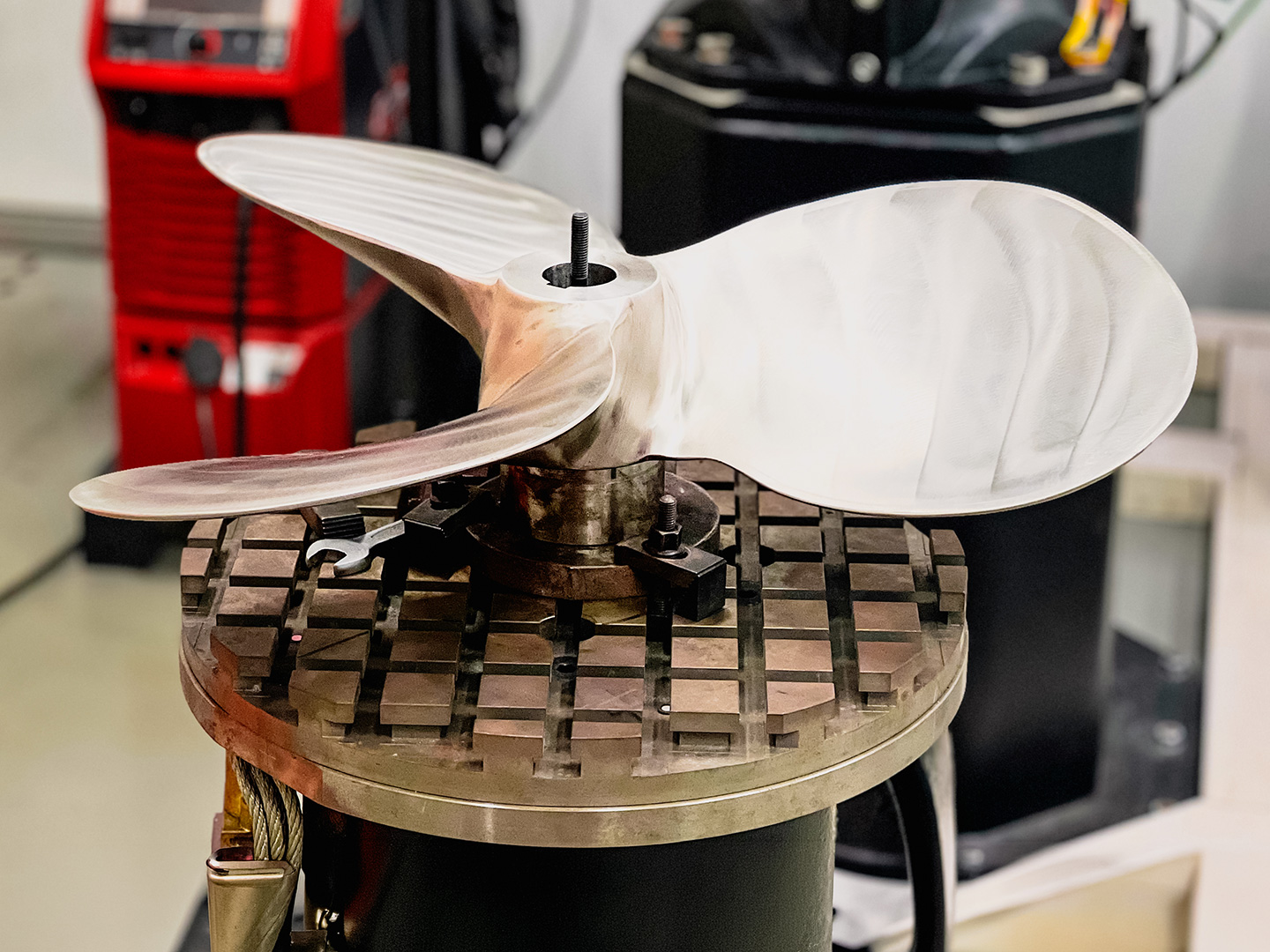
How spare parts additive manufacturing works in practice
People tend to picture the printer first, though in most projects it’s the least complicated step. The real effort goes into deciding which parts belong in a digital inventory and then proving that the printed version behaves like the original.
Selection starts from inventory data, and expectations should be kept realistic. Research on the rail sector puts the share of spare part items that could move to AM at roughly 10 to 15%, so the job is building a well-chosen portfolio rather than chasing a fully digital warehouse. The parts worth looking at usually have low or irregular demand, long lead times, expensive stocking, and a geometry and material that a qualified process handles without drama.
A typical project then goes through a sequence like this:
- Screening the inventory, which ranks parts by lead time, yearly demand, cost of downtime and how printable they are.
- Digitization when there’s no usable CAD model, by rebuilding the geometry from old 2D drawings or by 3D scanning a physical part, worn ones included, and checking it against the original tolerances.
- Some redesign, since a part conceived for casting rarely prints well as it is (machining allowances, different wall thicknesses, small assemblies merged into one piece).
- Qualification, where parameters are frozen, coupons are printed with each build and the mechanical properties are compared with the original spec (often with destructive tests on the first article).
- Post-processing: heat treatment, CNC on functional surfaces, non-destructive inspection.
- Finally the digital warehouse, where the file, the process parameters and the inspection plan are stored together so the part can be reproduced on any qualified machine.
Qualification is the step that slows programs down, and rightly so. A printed bracket that performs differently from the forged one it replaces is a problem waiting to happen, so the digital file has to carry the whole process window behind the approved part. Swap the machine, the wire or pellet batch, or the deposition strategy, and you may well need to requalify at least partially.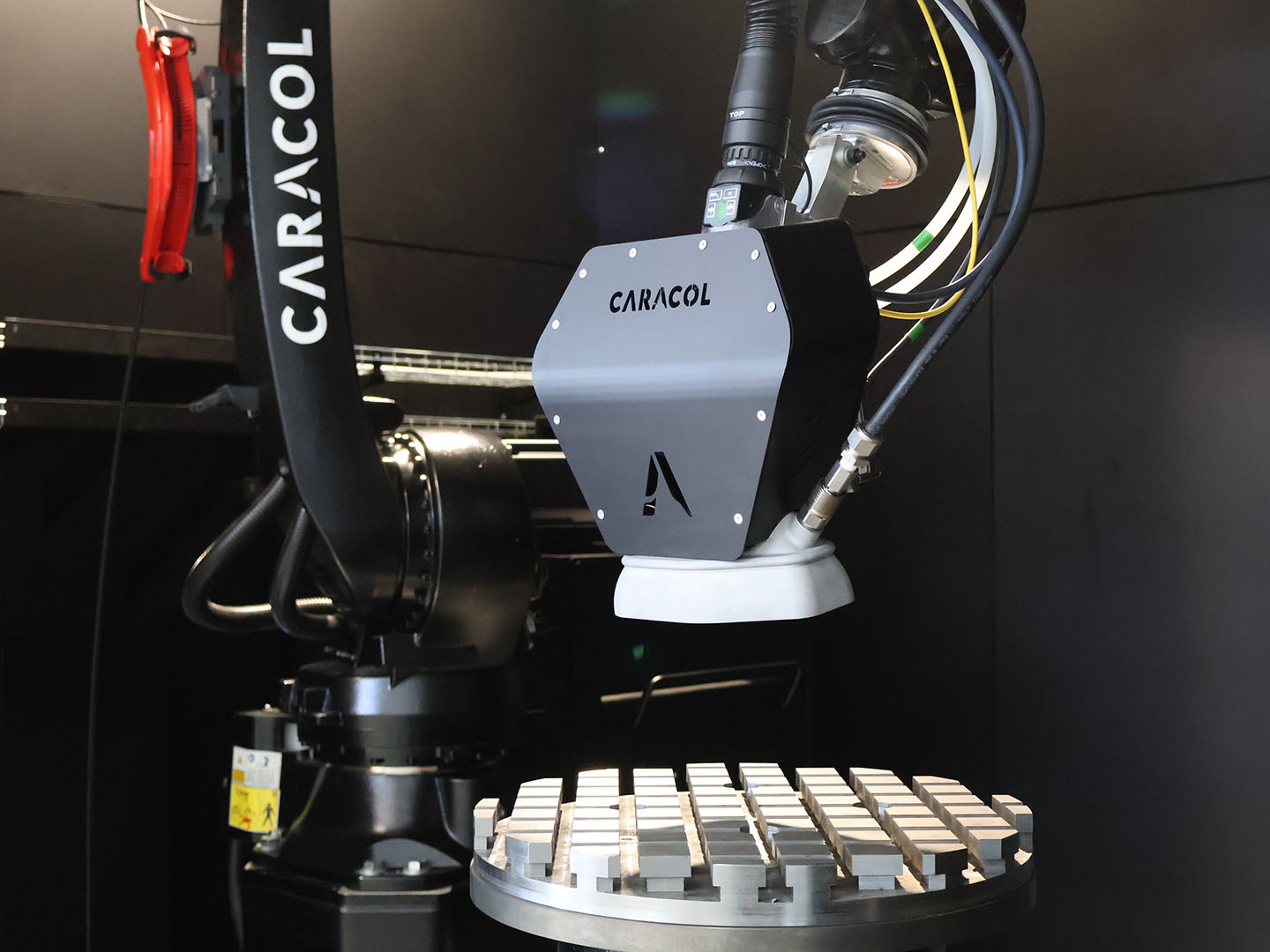
LFAM and WAAM for large additive manufacturing spare parts
Most of the early printed spares were small plastic items. Deutsche Bahn’s very first one, in 2015, was a coat hook. Things get harder as parts grow, because powder-bed machines have limited build volumes and become slow and costly at larger sizes, and that’s the gap two robotic deposition processes have started to fill.
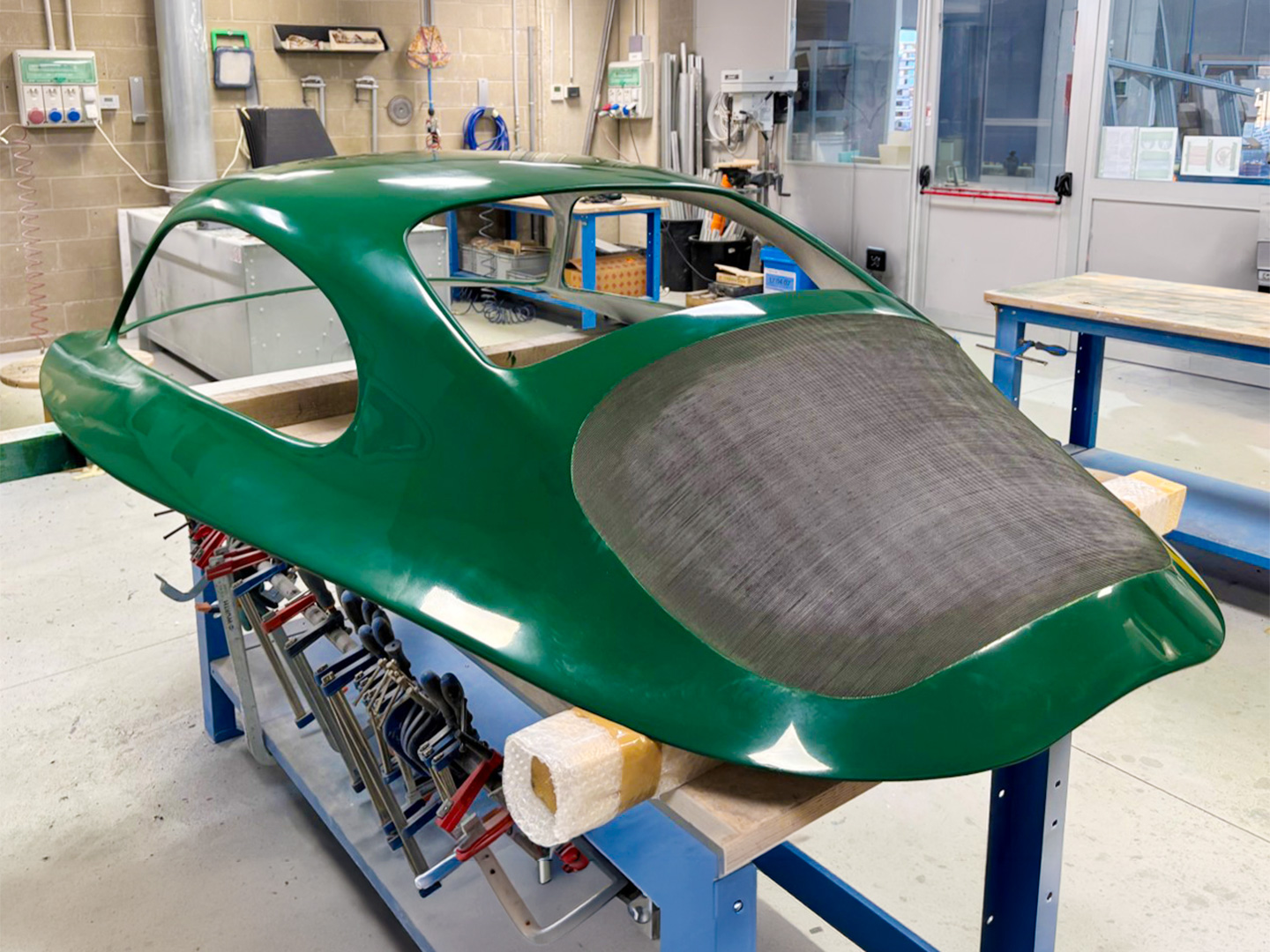
With Large Format Additive Manufacturing (LFAM), thermoplastic pellets, often filled with glass or carbon fiber, are melted in a heated screw mounted on an industrial robot and extruded bead by bead. Pellets are much cheaper than filament and allow far higher throughput. On Caracol’s Heron AM platform a high-flow extruder reaches up to 75 kg/h and works at temperatures up to 450 °C, enough for high-performance composites. Dual-chamber extrusion adds a useful option, with a technical polymer for the skin and a cheaper or recycled one for the core, which changes the cost picture on big parts loaded mainly at the surface. For spare parts, LFAM is a good match for covers, housings, ducts and fairings, and for replacing some metal components with composites when the loads allow it. To get a feel for the scale, the aerospace lamination tool Caracol developed with French manufacturer Formes et Volumes, made in carbon-fiber-reinforced polycarbonate, 2,200 × 2,200 × 600 mm and 180 kg, was printed in about 19 hours, with half the lead time and 30% lower cost than the conventional approach.
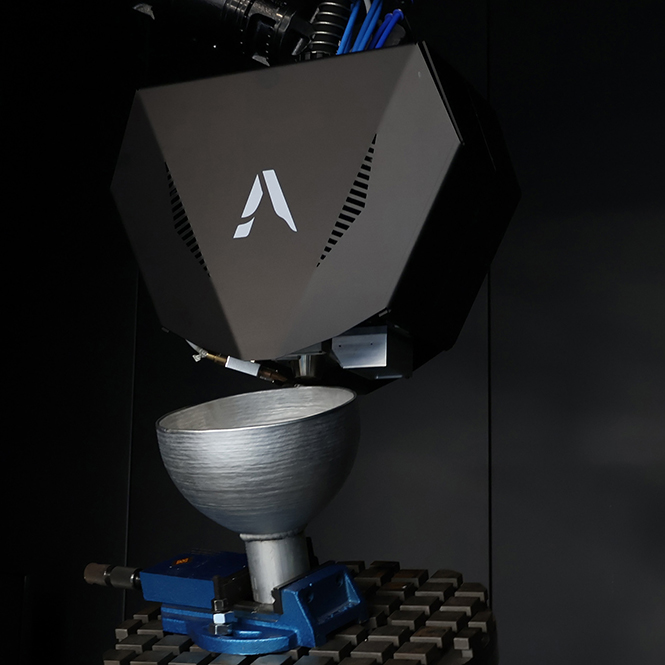
Wire Arc Additive Manufacturing (WAAM) does something similar with metal. An electric arc (in Caracol’s case derived from MIG welding) melts a wire that a robot lays down layer after layer. Wire is cheaper and easier to handle than metal powder, and deposition is counted in kilograms per hour, around 3.7 kg/h for 316L stainless steel on Caracol’s Vipra platform. Surfaces come out wavy and near-net, so any functional area gets machined afterwards, and few people in the field see that as a real drawback.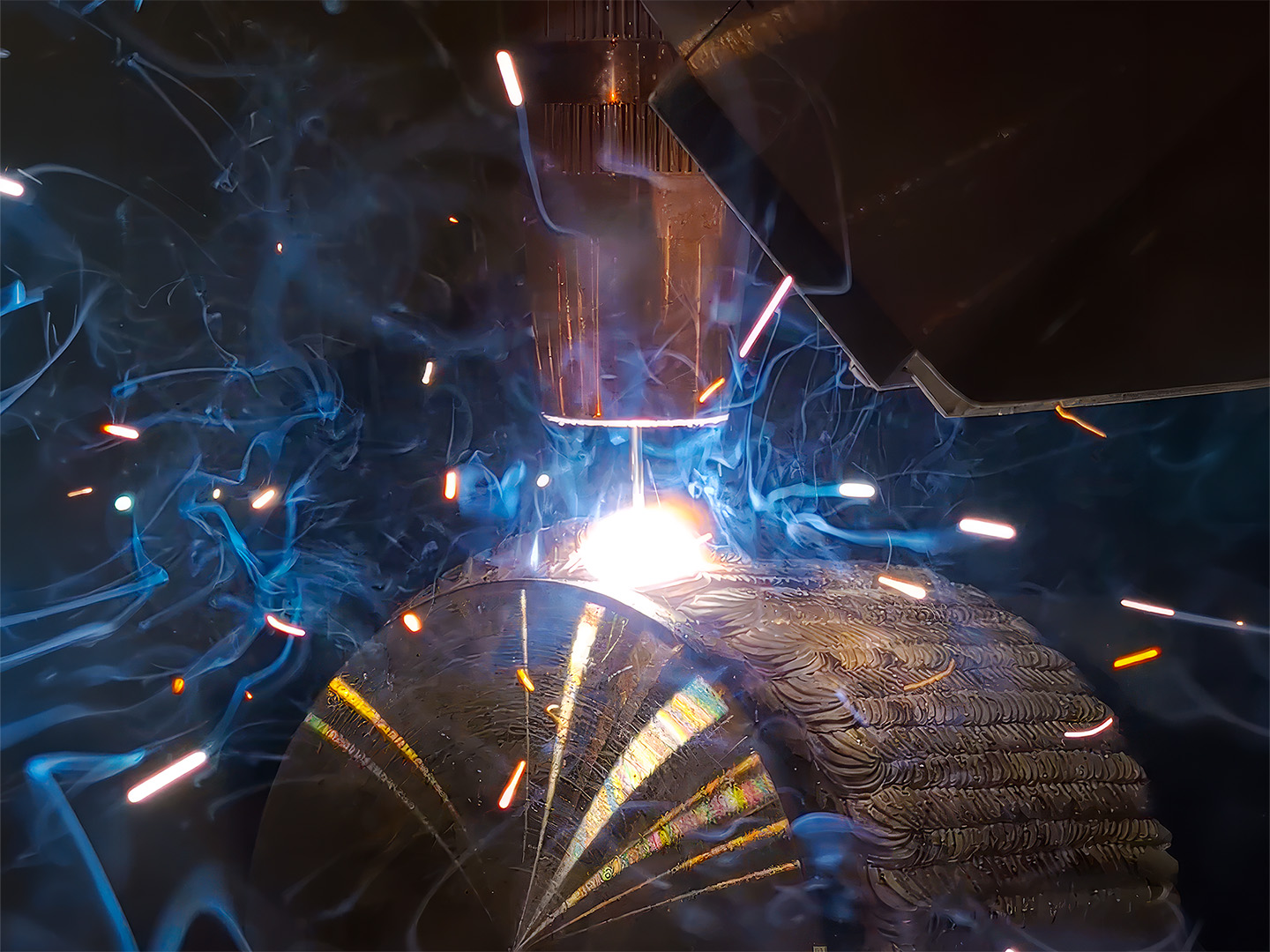
Additive manufacturing in the spare parts supply chain: what the numbers say
Deutsche Bahn has probably the most complete public record. By 2023 it had produced 100,000 printed spare parts across more than 500 applications, with around 1,000 virtual models in its digital warehouse and a goal of 10,000 by 2030. Its heaviest part, a 570 kg gearbox housing for shunting locomotives, wasn’t printed in the strict sense. The mold was made by binder jetting and the housing was then cast, and lead time went from ten months to two for a fleet of about 370 locomotives. Plenty of real projects look like this, a hybrid route that keeps the original alloy and still removes the bottleneck.
For metal parts printed directly, there’s a defense example. NP Aerospace and the Digital Manufacturing Centre built a suspension and differential carrier for the Mastiff protected vehicle on Caracol’s Vipra XP WAAM system, using ER100 wire. The carrier is 540 × 500 × 500 mm, weighs 110 kg and was printed in one piece in 60 hours before heat treatment and machining. Lead time came out roughly half that of casting or forging, mostly because there was no tooling to design, make and qualify. When the fleet counts a few dozen vehicles, that’s often the difference between having a replacement part and not having one.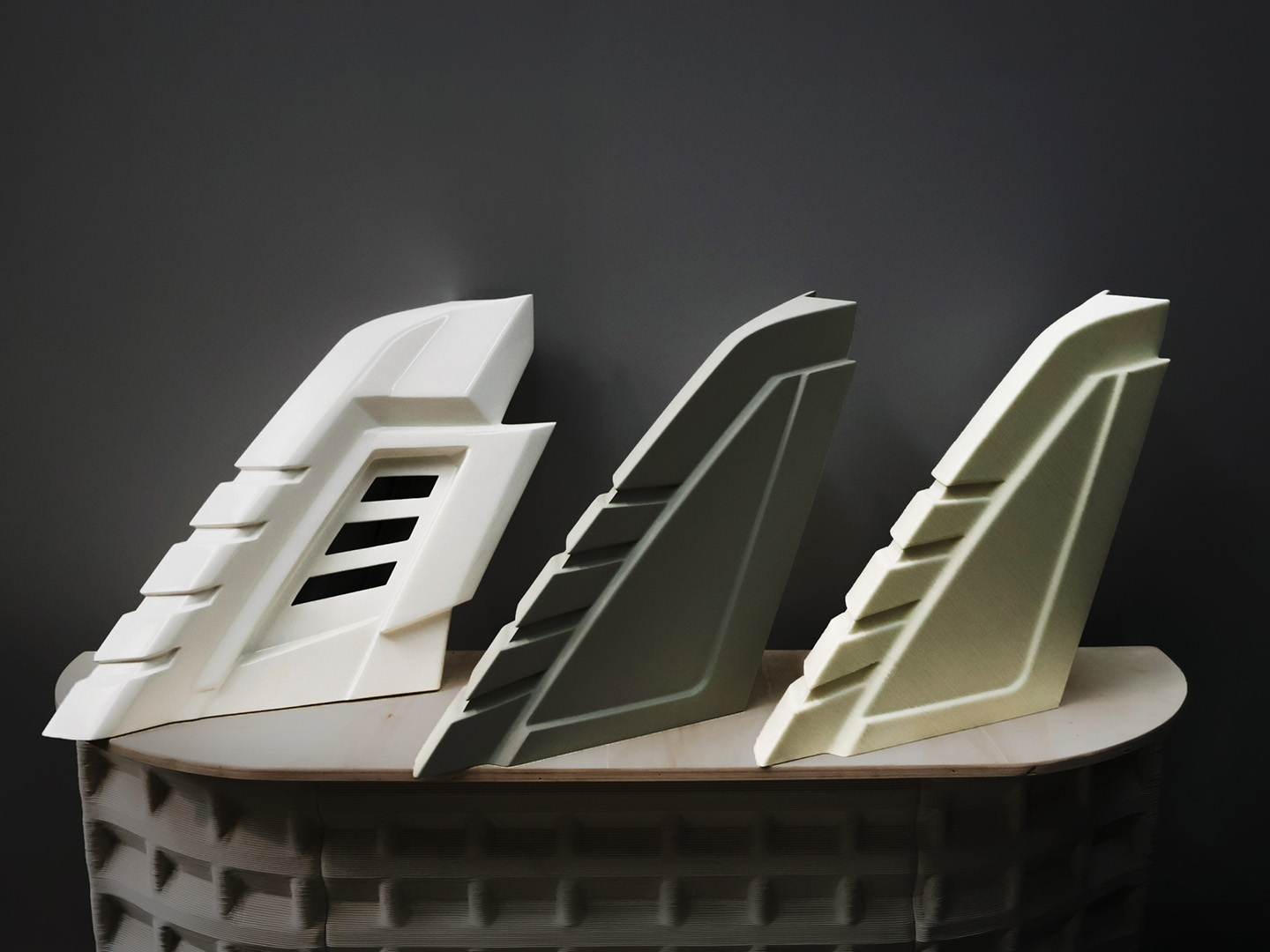
Microfactories and distributed manufacturing for spare parts
A digital warehouse delivers its full value only when there’s production capacity close to where the part is needed. That’s the idea behind distributed manufacturing, with output spread over several smaller sites instead of one central plant, and behind the microfactory, a compact production cell (often built into a shipping container) that brings printing, post-processing and inspection together. The US Marines and the Dutch Navy already deploy containerized 3D printing units, and robotic platforms such as Caracol’s Heron AM can be installed in mobile containers for in-situ work at construction or offshore sites.
BAE Systems Hägglunds has pushed the model further for armored vehicles. Its microfactory concept gives units in the field the equipment, the training and a Technical Data Pack for each spare, meaning a qualified recipe that covers both printing and post-processing, while the OEM keeps responsibility for it. Conventional stocks stay in place, and the microfactory steps in when supply lines break or a delivery would simply take too long.
On its own, a microfactory solves a local problem. The real gain comes when sites form a manufacturing network sharing the same qualified files, parameters and inspection rules, so a part approved at one location comes out identical at another, and an order can move to the next site when one is down or saturated. Rail research gives an idea of the stakes, with the AM4Rail project estimating around 10% less asset downtime from print-on-demand and savings of up to 30% on spare parts supply when each component is sourced through the most efficient route.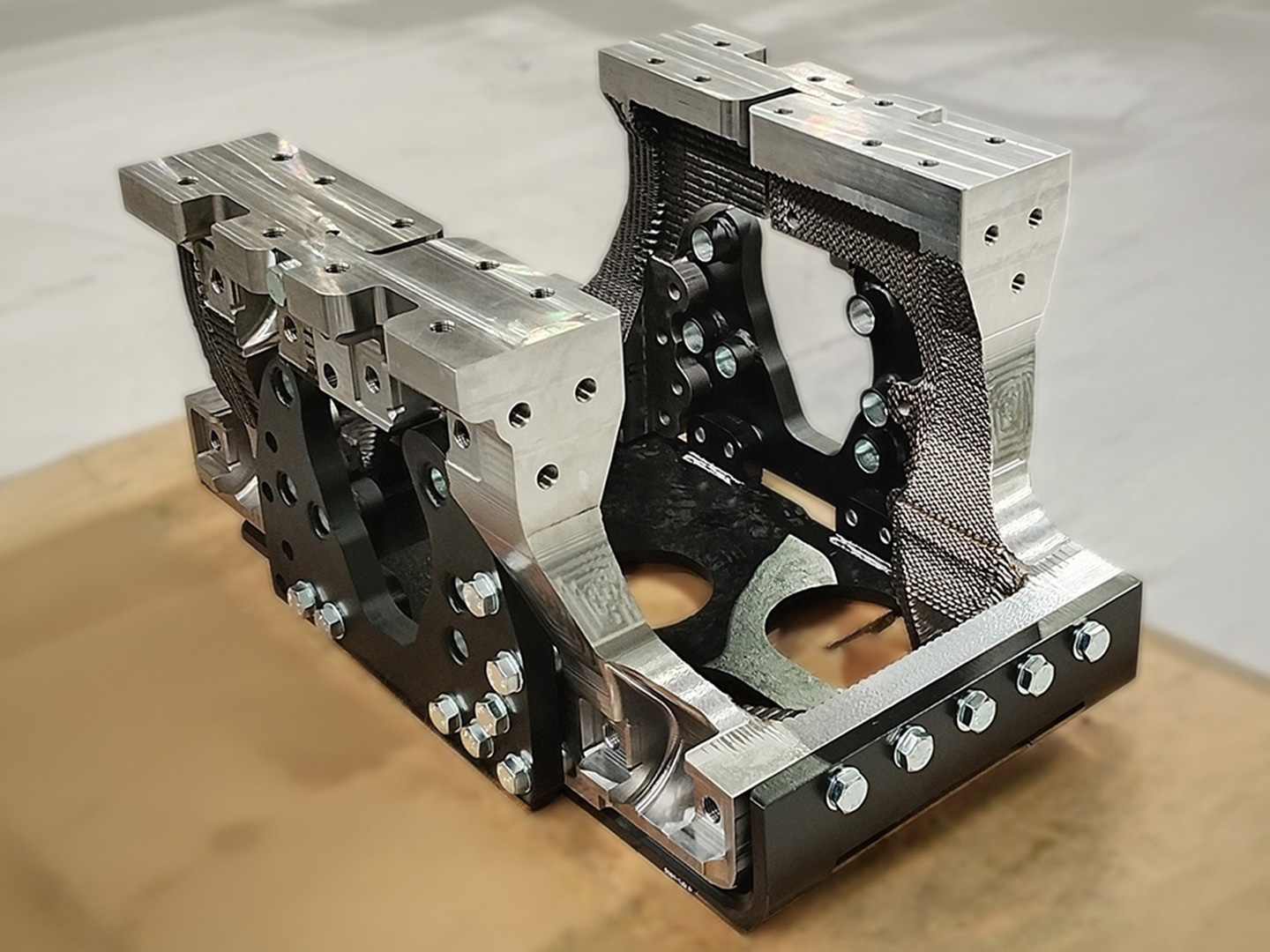
What will actually decide adoption
Hardware is seldom the limiting factor these days. Data and responsibility are harder to sort out. Who owns the digital model of a part designed 25 years ago, and who signs off when it’s printed in a microfactory on the other side of the network? Rail and defense are answering one approved part at a time, slow work but probably the only way it holds.
If you manage maintenance or supply chain, a reasonable first move is to pull the ten parts that cause the longest waits and the worst downtime, check which fit LFAM, WAAM or a hybrid route, and take one through qualification. That single part will teach you more than any feasibility study, including which components are honestly better off with their old supplier.
Sources
- Deutsche Bahn, 100,000 3D-printed spare parts, gearbox housing and lead times
- Deutsche Bahn, first printed part in 2015, 500+ applications and digital warehouse targets
- AM4Rail project, share of rail spare parts suited to AM, downtime and cost estimates
- Containerized 3D printing units used by the US Marines and the Dutch Navy
- BAE Systems Hägglunds microfactory and Technical Data Packs
Ready to rethink how your spare parts get made?
LFAM FOR THE AUTOMOTIVE INDUSTRY
Discover how to use Caracol’s large-scale 3D printing technology for your automotive applications. Register here to download the whitepaper.
Related Knowledge Hub
Read more on our LFAM insights
-

Knowledge Hub. Is 3D Printing Environmentally Friendly? An Industrial View
-

Knowledge Hub. Direct Energy Deposition (DED): What It Is and How It Works
-

Knowledge Hub. 3D printing car in additive manufacturing: how the automotive industry is rethinking production
-

Knowledge Hub. Robotic LFAM for end-use parts in the transportation industry
-

Knowledge Hub. What Is Rapid Prototyping in 3D Printing? Methods, Examples, and Where Prototyping Ends
-

Knowledge Hub. Why the advantages of robotics in manufacturing start in the classroom
-

Knowledge Hub. Robotic automation in manufacturing: how industrial robots are reshaping modern production
-

Knowledge Hub. 3D printing in defense: how robotic LFAM and WAAM are redefining industrial dual-use production
-

Knowledge Hub. How to build a robotic LFAM Microfactory – the final tutorial
-

Knowledge Hub. The microfactory model: robotic additive manufacturing for flexible industrial production
-

Knowledge Hub. Metal 3d printing: challenges & scalability
-

Knowledge Hub. Industry 5.0 vs Industry 4.0: key differences and what changes for manufacturing
-

Knowledge Hub. On-demand manufacturing: what it is, how it works, and some examples
-

Knowledge Hub. How Is 3D Printing Transforming Architectural Design?
-

Knowledge Hub. Carbon Fiber Composite Manufacturing at Scale: How Robotic LFAM Redefines Composites
-

Knowledge Hub. What 3D Printer Design Software to Use for Large Format Robotic Systems: A Complete Guide
-

Knowledge Hub. 3D Printing in Automotive Manufacturing, Aviation, and Mass Production: How AM Is Reshaping Mobility
-

Knowledge Hub. Best practices for Design & Production with robotic LFAM
-

Knowledge Hub. Integrating robotic process automation (RPA) for strategic growth in modern advanced manufacturing
-

Knowledge Hub. Robotic large format additive production for Jigs & Molds
-

Knowledge Hub. Robotic large format additive production for Marine Applications
-

Knowledge Hub. Robotic large format additive production for the Automotive Industry
-

Knowledge Hub. Robotic additive production for Design & Architecture
-

Knowledge Hub. Applications of 3D Printing in Aerospace and Defense
-

Knowledge Hub. Distributed Manufacturing: Building Resilient, Flexible Supply Chains
-

Knowledge Hub. Metal Additive Manufacturing Market: Technologies & Processes for Demanding Industries
-

Knowledge Hub. Robotics and Automation transform industries: a look into the Future of Manufacturing
-

Knowledge Hub. 3D printing Architectural Elements for Building
-

Knowledge Hub. Empowering industrial production with live data: the growing role of IoT in LFAM
-

Knowledge Hub. How is 3d printing used in the automotive industry?
-

Knowledge Hub. What is Advanced Manufacturing? How technology improves industrial manufacturing
-

Knowledge Hub. Why adopt thermoplastic 3d printing materials for advanced industrial applications
-

Knowledge Hub. Strengths and weaknesses of the 3 most common 3D printing materials
-

Knowledge Hub. Industry 4.0 & additive manufacturing: delivering efficiency and sustainability in production
-

Knowledge Hub. The rise of 3D printed furniture: leveraging LFAM to revolutionize the design industry
-

Knowledge Hub. The future of LFAM: integration at its core
-

Knowledge Hub. The benefits of 3D printing aircraft parts
-

Knowledge Hub. How does 3D printing help the environment?
-

Knowledge Hub. Innovation in the marine industry: 3D printing boat structures and components
-

Knowledge Hub. Pellet 3D printing and its benefits compared to 3D filament extruders
-

Knowledge Hub. Guidelines for large format 3d printing
-

Knowledge Hub. Sustainability in the automotive industry through LFAM
-

Knowledge Hub. What is robotic LFAM 3D printing?
-

Knowledge Hub. Beyond rapid prototyping 3D printing, towards industrial production with LFAM
-

Knowledge Hub. Engineering the future of manufacturing through LFAM