




 Knowledge Hub
 Metal Additive Manufacturing Market: Technologies & Processes for Demanding Industries

August 2025
Metal Additive Manufacturing Market: Technologies & Processes for Demanding Industries
August 2025

Metal additive manufacturing is transforming how industries design and produce metal parts. From aerospace to marine and energy, companies are asking: “What is metal additive manufacturing?” and “How does metal additive manufacturing work?” This article explores the main applications of these technologies, their benefits, challenges, and how innovative solutions like Caracol’s WAAM-based Vipra AM platform are helping shape the metal additive manufacturing market for demanding industrial sectors.
Metal Additive Manufacturing Applications and Benefits
To fully understand the application potential of metal 3D printing, it is essential to first clarify what we are talking about and its fundamental principles by addressing two key questions:
- What is metal additive manufacturing? At its core, metal additive manufacturing is the process of building three-dimensional metal parts layer by layer directly from CAD models, minimizing material waste and enabling complex geometries. The main types of metal additive manufacturing include Powder Bed Fusion (PBF), Binder Jetting, Directed Energy Deposition (DED), laser or arc-based wire welding processes like WAAM, and metal extrusion.
- How does metal additive manufacturing work? In methods such as WAAM, a robotic arm guides an electric or plasma arc to melt metal wire, depositing molten beads onto a substrate. Each new layer is welded to the previous one until the full geometry is built. Other metal additive manufacturing processes involve melting powder with lasers (PBF), using electron beams in vacuum environments (EBM), binder jetting followed by sintering, or extrusion of metal-filled filaments. Collectively, these methods form a versatile toolkit of metal additive manufacturing technologies and solutions.
Metal additive manufacturing (AM) is increasingly adopted across industries for its versatility, efficiency, and transformative potential. As the metal additive manufacturing market continues to grow, advanced systems like Caracol’s Vipra AM, based on Wire Arc Additive Manufacturing (WAAM), expand the range of applications, offering tailored solutions to complex production challenges.
- Aerospace & Defense: Metal AM enables lightweight, high-performance components in strong materials like titanium. It allows the production of complex geometries that are hard or too costly to achieve with traditional technologies, while cutting costs significantly and reducing material waste by up to 90%.
- Automotive & Marine: Ideal for large parts such as engine blocks, propellers, and frames, metal AM offers faster production, customization, and on-demand manufacturing, reducing both lead times and inventory. These advantages make it particularly valuable for producing custom metal parts tailored to specific performance and design requirements.
- Energy & Infrastructure: Metal AM supports the production of durable, large-format components and efficient repair solutions. Technologies like DED are used for molds, pipe fittings, turbine rotors, and structural reinforcements, either on-site or centrally. These metal additive manufacturing technologies help industries improve flexibility while reducing dependence on conventional tooling.

Vipra AM – Caracol’s Robotic Metal Additive Manufacturing Platform
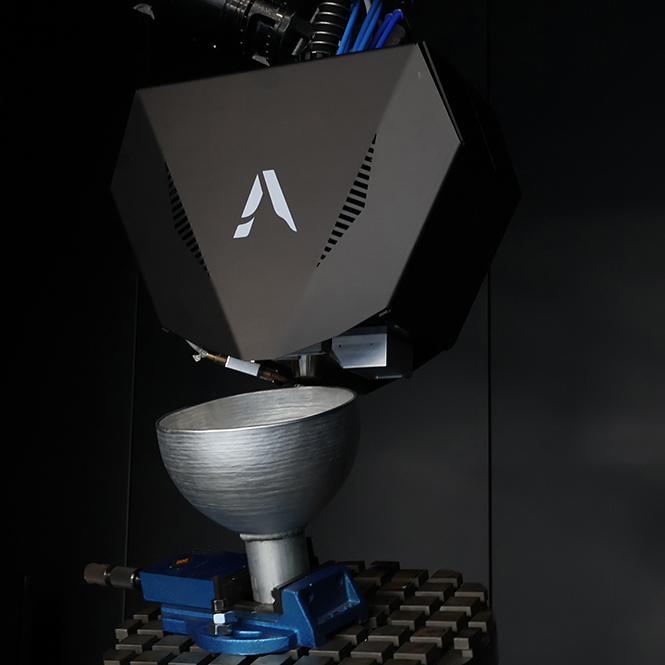
Caracol’s Vipra AM is a state-of-the-art metal additive manufacturing solution that leverages wire arc additive manufacturing (WAAM) as a process in a robotic large-format platform. It was developed in two configurations:
- Vipra XQ (Extreme Quality) uses plasma arc deposition for high-strength, precision parts, ideal for aerospace, energy, and infrastructure.
- Vipra XP (Extreme Productivity) prioritizes speed and material efficiency by leveraging CMT technology, processing aluminum and nickel alloys for applications like marine and automotive components.
Vipra AM’s turnkey integration of robotics, sensors, software (Eidos Manufacturing suite), and monitoring offers end-to-end control, enabling superior metal additive manufacturing applications. By combining advanced metal additive manufacturing processes with scalable robotic production, Caracol works to deliver benefits such as 90% buy-to-fly ratios on material used, drastic reductions in lead time of up to 90-95%, and hybrid workflows that complement traditional manufacturing.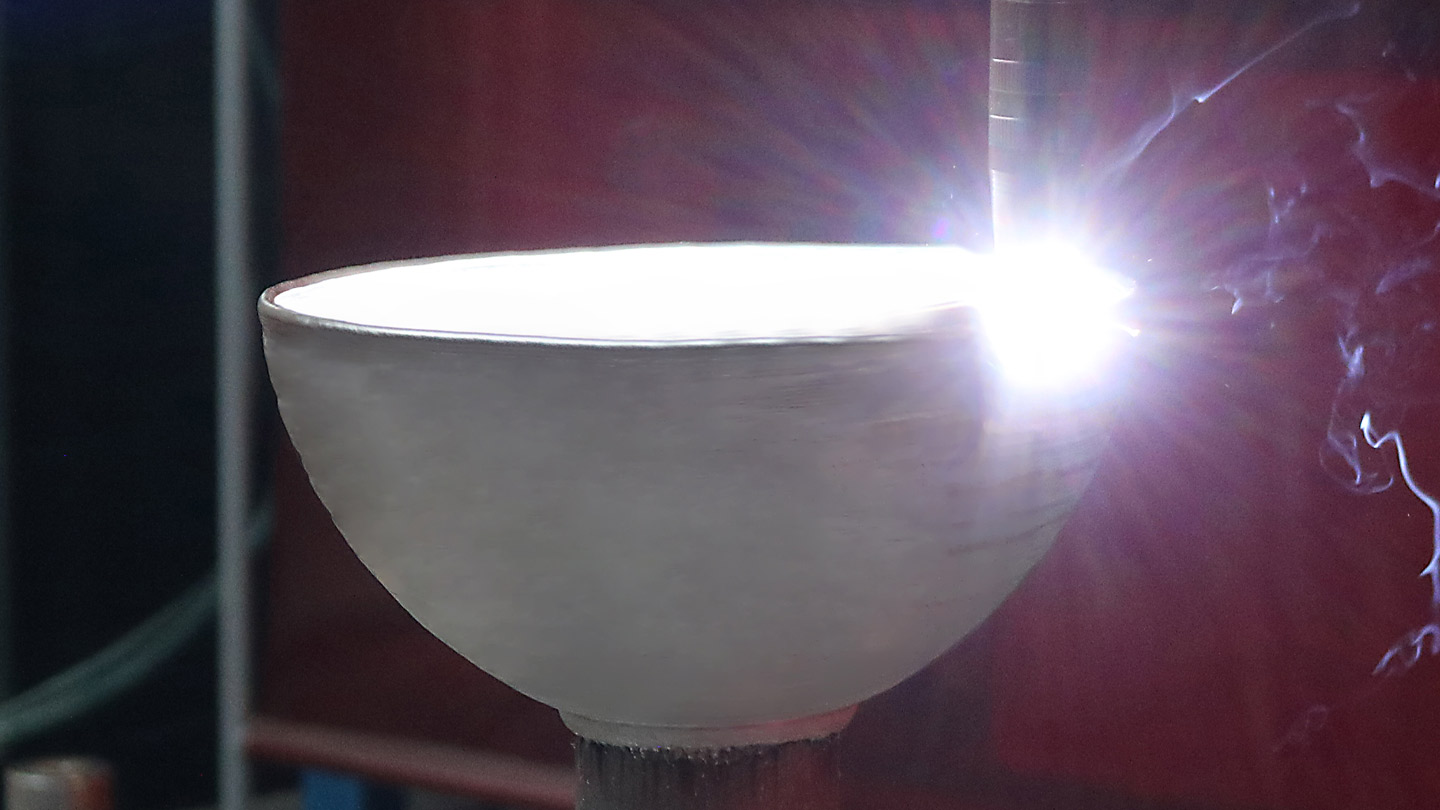
Real-World Applications Featuring Vipra AM
- Conveyor screw: Custom industrial screw in 316L stainless steel, ensuring strength and corrosion resistance for heavy-duty machinery.
- Marine propeller: Produced in CuAl8Ni6 alloy for excellent performance in saltwater environments.
- Aerospace tooling: High-precision autoclave cure tools in Invar to match tight tolerances and thermal stability.
- Oil & gas flanges: Multi-material neck flanges combining alloys to enhance durability and corrosion resistance.
These case studies illustrate how Vipra AM delivers robust metal additive manufacturing solutions across diverse sectors:
- Customization & complexity: Complex geometries and custom designs are feasible without the need for tooling or casting, making the technology ideal for custom metal parts and application-specific components.
- Material efficiency: High buy-to-fly ratios and low material waste make the process more sustainable and cost-effective.
- Rapid production: Reduced lead times thanks to quick near-net-shape production enable faster project turnaround.
- Durability & performance: Use of high-performance alloys improves component longevity, especially in harsh environments.
- Process control: End-to-end integration of robotics, software, and monitoring ensures repeatability and consistency across production runs.
These case studies illustrate how Vipra AM delivers robust metal additive manufacturing solutions across diverse sectors:
- Customization & complexity: Complex geometries and custom designs are feasible without the need for tooling or casting.
- Material efficiency: High buy‑to‑fly ratios and low material waste make the process more sustainable and cost‑effective.
- Rapid production: Reduced lead times thanks to quick near-net-shape production, enable quicker project turnaround.
- Durability & performance: Use of high-performance alloys improves component longevity, especially in harsh environments.
- Process control: End‑to‑end integration of robotics, software, and monitoring ensures repeatability and consistency across production runs.

Challenges and Considerations in Metal Additive Manufacturing
While metal additive manufacturing offers significant advantages, it still presents several challenges:
- Thermal management: Residual stresses and microstructural inconsistencies can arise due to high heat input, requiring careful process control.
- Repeatability and process stability: Ensuring consistent results at scale demands advanced monitoring systems and closed-loop feedback.
- Costs and certifications: The investment in materials, equipment, and compliance remains a key consideration, especially as companies evaluate the role of metal additive manufacturing technologies in industrial production.
Despite these hurdles, metal additive manufacturing continues to evolve into a powerful production tool. Understanding what is metal additive manufacturing and how does metal additive manufacturing work means recognizing a set of technologies, each offering unique strengths for different applications.
Caracol’s Vipra AM exemplifies this evolution, combining scalability, precision, and resource efficiency in a fully integrated solution. As industries seek smarter, more sustainable ways to design and manufacture, platforms like Vipra AM demonstrate that metal additive manufacturing is not just a tool for prototyping, but a transformative force for full-scale industrial production. With the metal additive manufacturing market expanding and demand rising for efficient production of custom metal parts, these technologies are becoming increasingly central to the future of advanced manufacturing.
Ready to unlock the potential of metal AM for high-performance industrial parts?
LFAM FOR THE AUTOMOTIVE INDUSTRY
Discover how to use Caracol’s large-scale 3D printing technology for your automotive applications. Register here to download the whitepaper.
Related Knowledge Hub
Read more on our LFAM insights
-
Knowledge Hub. Is 3D Printing Environmentally Friendly? An Industrial View
-

Knowledge Hub. Direct Energy Deposition (DED): What It Is and How It Works
-

Knowledge Hub. 3D printing car in additive manufacturing: how the automotive industry is rethinking production
-

Knowledge Hub. Robotic LFAM for end-use parts in the transportation industry
-

Knowledge Hub. What Is Rapid Prototyping in 3D Printing? Methods, Examples, and Where Prototyping Ends
-

Knowledge Hub. Why the advantages of robotics in manufacturing start in the classroom
-

Knowledge Hub. Robotic automation in manufacturing: how industrial robots are reshaping modern production
-

Knowledge Hub. 3D printing in defense: how robotic LFAM and WAAM are redefining industrial dual-use production
-

Knowledge Hub. How to build a robotic LFAM Microfactory – the final tutorial
-

Knowledge Hub. The microfactory model: robotic additive manufacturing for flexible industrial production
-

Knowledge Hub. Metal 3d printing: challenges & scalability
-

Knowledge Hub. Industry 5.0 vs Industry 4.0: key differences and what changes for manufacturing
-

Knowledge Hub. On-demand manufacturing: what it is, how it works, and some examples
-

Knowledge Hub. How Is 3D Printing Transforming Architectural Design?
-

Knowledge Hub. Carbon Fiber Composite Manufacturing at Scale: How Robotic LFAM Redefines Composites
-

Knowledge Hub. What 3D Printer Design Software to Use for Large Format Robotic Systems: A Complete Guide
-

Knowledge Hub. 3D Printing in Automotive Manufacturing, Aviation, and Mass Production: How AM Is Reshaping Mobility
-

Knowledge Hub. Best practices for Design & Production with robotic LFAM
-

Knowledge Hub. Integrating robotic process automation (RPA) for strategic growth in modern advanced manufacturing
-

Knowledge Hub. Robotic large format additive production for Jigs & Molds
-

Knowledge Hub. Robotic large format additive production for Marine Applications
-

Knowledge Hub. Robotic large format additive production for the Automotive Industry
-

Knowledge Hub. Robotic additive production for Design & Architecture
-

Knowledge Hub. Applications of 3D Printing in Aerospace and Defense
-

Knowledge Hub. Distributed Manufacturing: Building Resilient, Flexible Supply Chains
-

Knowledge Hub. Robotics and Automation transform industries: a look into the Future of Manufacturing
-

Knowledge Hub. 3D printing Architectural Elements for Building
-

Knowledge Hub. Empowering industrial production with live data: the growing role of IoT in LFAM
-

Knowledge Hub. How is 3d printing used in the automotive industry?
-

Knowledge Hub. What is Advanced Manufacturing? How technology improves industrial manufacturing
-

Knowledge Hub. Why adopt thermoplastic 3d printing materials for advanced industrial applications
-

Knowledge Hub. Strengths and weaknesses of the 3 most common 3D printing materials
-

Knowledge Hub. Industry 4.0 & additive manufacturing: delivering efficiency and sustainability in production
-

Knowledge Hub. The rise of 3D printed furniture: leveraging LFAM to revolutionize the design industry
-

Knowledge Hub. The future of LFAM: integration at its core
-

Knowledge Hub. The benefits of 3D printing aircraft parts
-

Knowledge Hub. How does 3D printing help the environment?
-

Knowledge Hub. Innovation in the marine industry: 3D printing boat structures and components
-

Knowledge Hub. Pellet 3D printing and its benefits compared to 3D filament extruders
-

Knowledge Hub. Guidelines for large format 3d printing
-

Knowledge Hub. Sustainability in the automotive industry through LFAM
-

Knowledge Hub. What is robotic LFAM 3D printing?
-

Knowledge Hub. Beyond rapid prototyping 3D printing, towards industrial production with LFAM
-

Knowledge Hub. Engineering the future of manufacturing through LFAM