




 Knowledge Hub
 Direct Energy Deposition (DED): What It Is and How It Works

September 2026
Direct Energy Deposition (DED): What It Is and How It Works
September 2026

Direct energy deposition (DED) is one of the metal additive manufacturing types that scale best to large parts. This guide explains how the process works, how laser, electron beam and wire arc variants compare, and where WAAM already competes with casting and forging in aerospace, defense and dual-use transportation.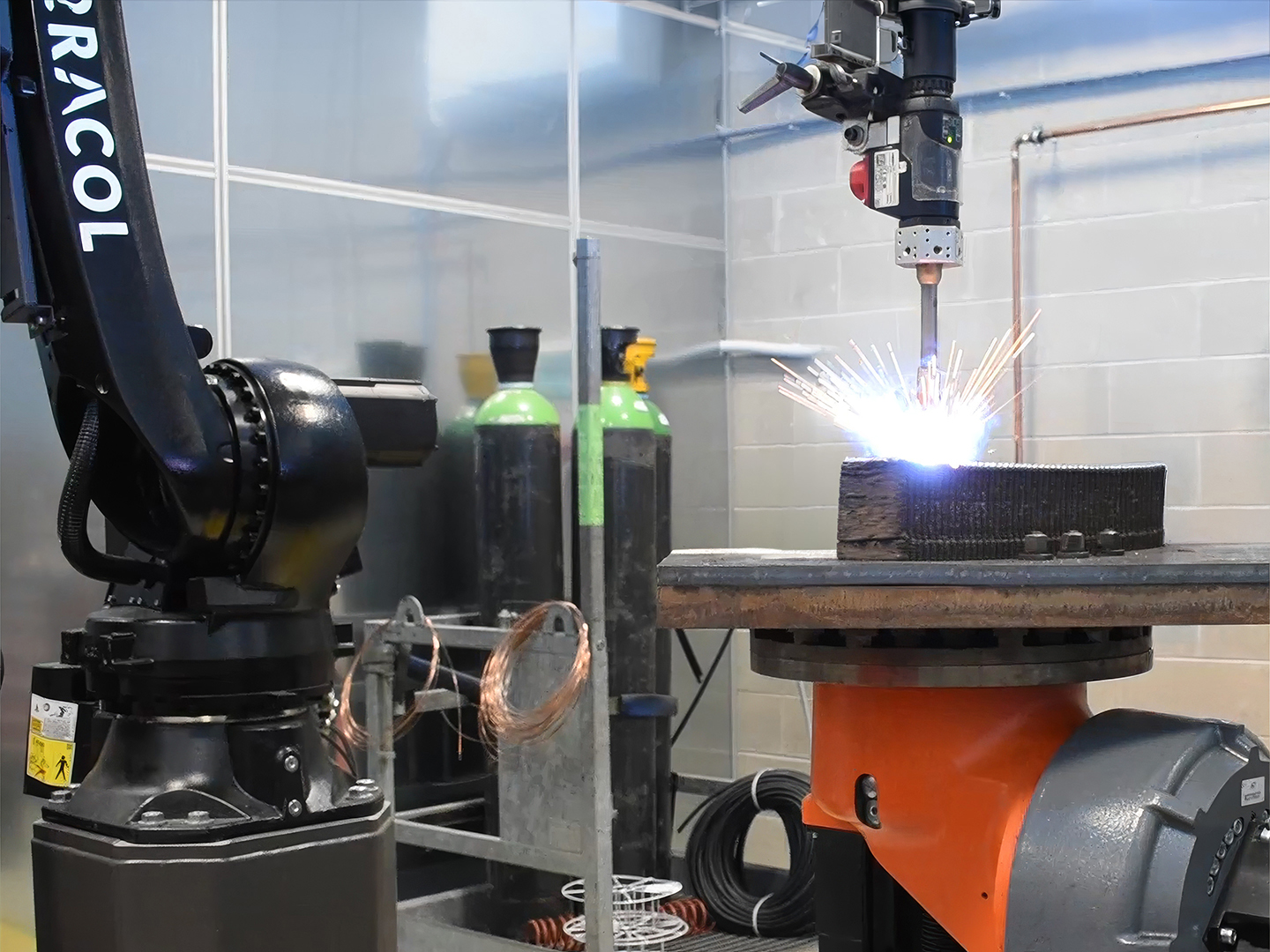
What Is Direct Energy Deposition in Metal Additive Manufacturing?
Direct energy deposition, called directed energy deposition in the ISO/ASTM 52900 standard, is a metal additive manufacturing process that melts wire or powder with a focused heat source as the material reaches the substrate. The part grows bead by bead in an open workspace, with no powder bed and, in most setups, no sealed build chamber.
Ask engineers what metal additive manufacturing is and most will describe a laser fusing thin powder layers inside a sealed chamber. Powder bed fusion is only one route. Its layers measure a few tens of microns, while an arc-based DED layer is typically 1 to 2 mm high.
How does metal additive manufacturing work when the build volume is open? Every new layer reheats the ones below. Heat builds up as the part grows, and the melt pool widens unless the operator holds the interpass temperature with dwell times or adjusts travel speed and wire feed. Residual stresses bend the substrate plate, so path strategies alternate directions or build the part symmetrically.
Laser profilometers and thermal cameras measure layer height and temperature during the build, and the controller corrects parameters on the fly. Caracol’s WAAM digital twin works on this principle.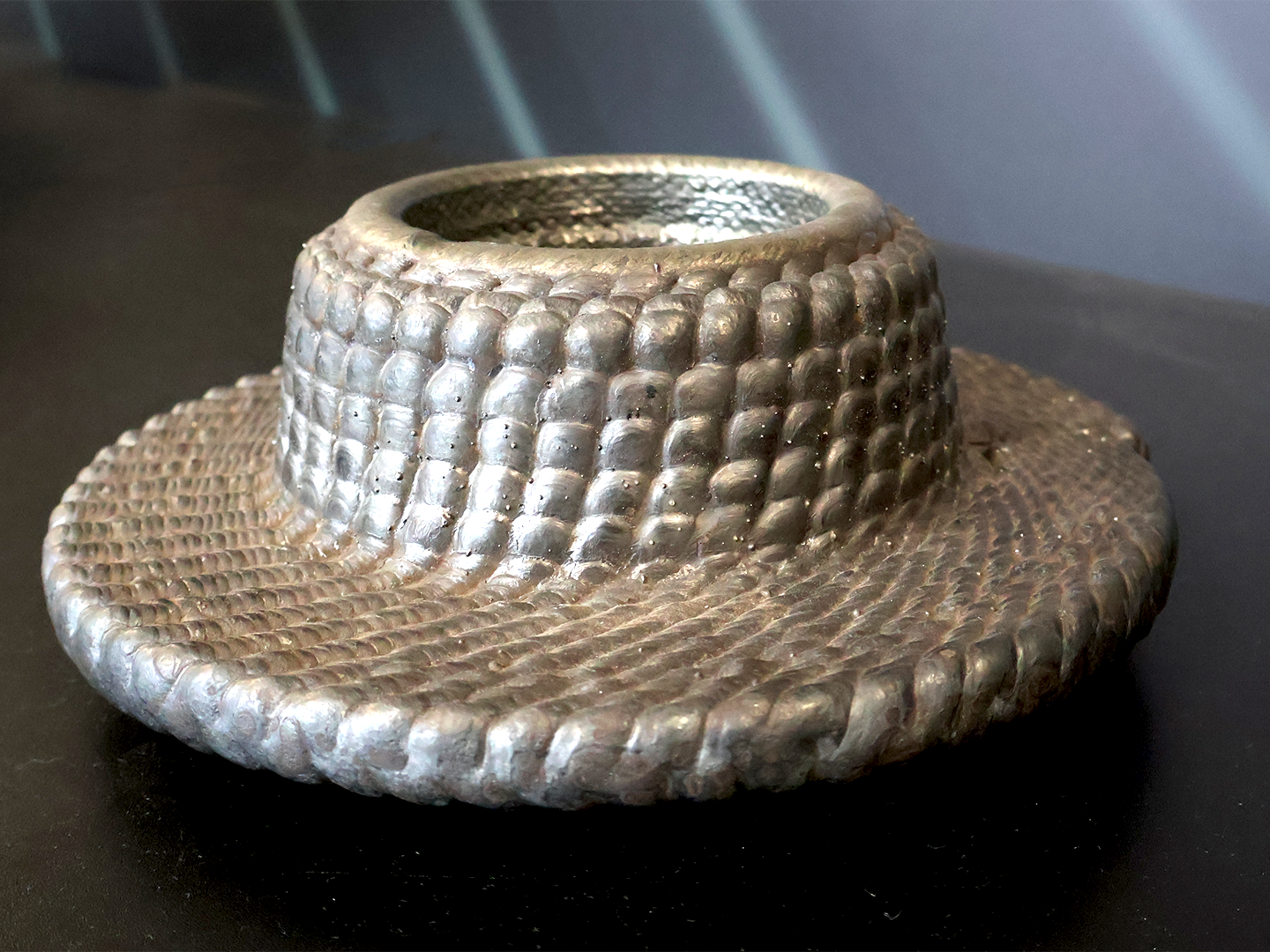
Types of Direct Energy Deposition (DED), and Why Robotic WAAM Stands Out
Among the types of metal 3D printing, DED variants differ mainly in their energy source, which in turn affects resolution, deposition rate and metallurgy.
- Laser DED delivers precise, low heat input and is widely used for cladding and repairing high-value parts, even though some of the blown powder never reaches the melt pool.
- Electron beam DED runs in a vacuum, which keeps titanium deposits very clean. The cost of the vacuum chamber rises quickly with part size.
- Arc-based DED (WAAM) uses welding wire with almost full material utilization and reaches several kg/h, leaving a surface waviness that is later machined away.
Inside WAAM the choice of arc also matters. Cold Metal Transfer (CMT) retracts the wire at each short circuit. Heat input and spatter drop, which helps with aluminum and thin walls. Plasma arc keeps the wire feed independent from the arc energy, giving finer control over dilution and bead shape. The most advanced WAAM technologies, such as Caracol’s Vipra AM combines both options on a 9-axis robotic cell, and its positioner tilts the part so that overhangs can be built without supports.
WAAM Applications: Where Metal 3D Printing Pays Off
The strongest business cases involve costly alloys and heavy parts, where machining from billet would turn most of the material into chips. D-Orbit studied a WAAM propellant tank in 2319, an Al-Cu alloy, and Eligio Re Fraschini printed a 110 kg 316L spar tool for carbon lamination in 30 hours at 3.7 kg/h. Invar 36 suits composite tooling well. Its thermal expansion is close to that of carbon fiber reinforced polymer (CFRP), so printed autoclave molds hold their dimensions during cure.
DED also handles multi-material parts. On an oil & gas neck flange, a corrosion-resistant alloy goes only where the process fluid touches the part, and the rest of the body stays in the base material. In 3D metal printing (metal additive manufacturing), designers plan a machining allowance of a few millimeters from the start, because the part is printed near-net and then finished by milling.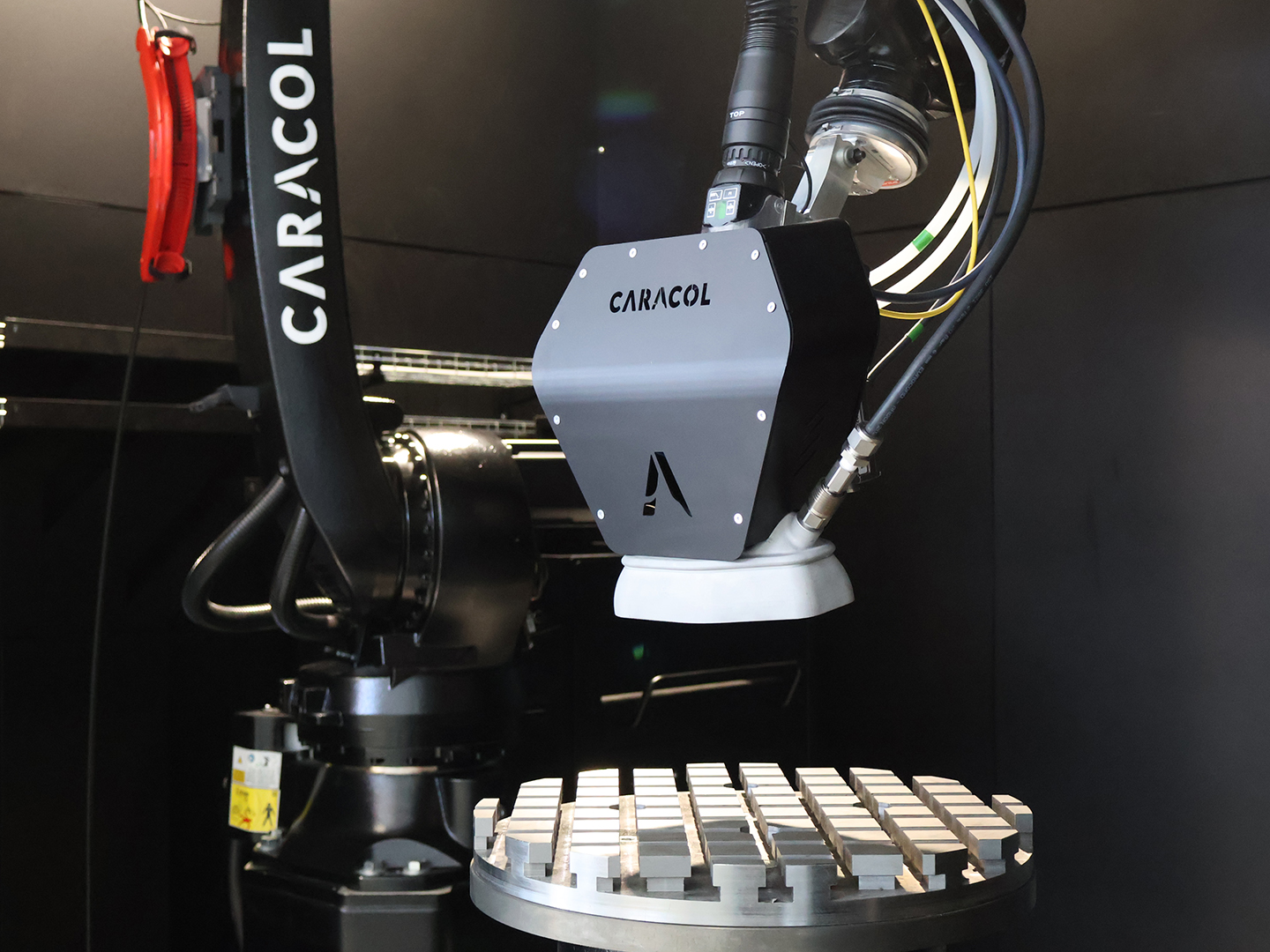
3D Printing in Defense: Dual-Use and Transportation
3D printing in defense already delivers load-bearing parts. NP Aerospace, produced a 110 kg suspension and differential carrier for the Mastiff armored vehicle. Printing the part took about 60 hours, followed by heat treatment and machining. Lead time dropped by up to 50% compared with casting and forging, and tooling costs disappeared. In service, the carrier takes shock and dynamic loads.
WAAM also changes the supply chain. Legacy parts whose casting patterns were lost long ago can be rebuilt from a 3D scan, and a qualified parameter set can run on any certified cell, including microfactory units deployed close to operations. Rail operators maintaining decades-old rolling stock face the same obsolescence problem as fleets of military ground vehicles. This overlap makes the technology dual use. For 3D printing in aerospace and defense, qualification remains the main bottleneck, since every combination of alloy, geometry and parameter window has to be validated before a part goes into service.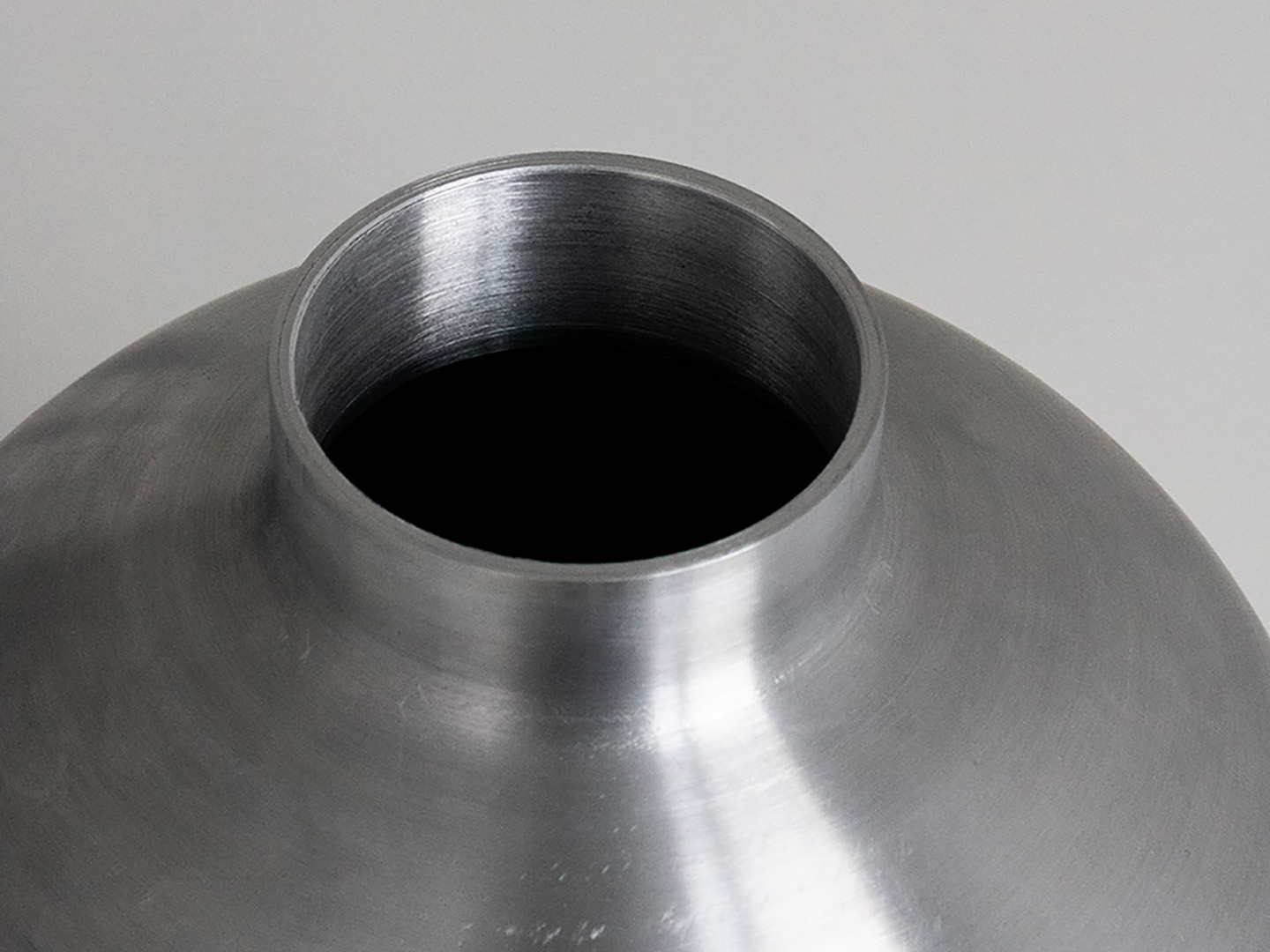
How to Start with Direct Energy Deposition
Direct energy deposition delivers results when you plan it as a process chain. Deposition, in-process monitoring, heat treatment and finish machining get designed together, starting from the first CAD model. The companies seeing results today started with a narrow and well-defined application, such as a tool, a spare part or a component with long casting lead times, built a solid dataset of mechanical properties around it and only then extended the approach to other parts.
WAAM qualification standards are maturing and closed-loop control keeps improving. Companies that build their material databases now will have qualified parameters ready when the next program needs them.
Thinking about where DED could fit in your production?
LFAM FOR THE AUTOMOTIVE INDUSTRY
Discover how to use Caracol’s large-scale 3D printing technology for your automotive applications. Register here to download the whitepaper.
Related Knowledge Hub
Read more on our LFAM insights
-

Knowledge Hub. 3D printing car in additive manufacturing: how the automotive industry is rethinking production
-

Knowledge Hub. Robotic LFAM for end-use parts in the transportation industry
-

Knowledge Hub. What Is Rapid Prototyping in 3D Printing? Methods, Examples, and Where Prototyping Ends
-

Knowledge Hub. Why the advantages of robotics in manufacturing start in the classroom
-

Knowledge Hub. Robotic automation in manufacturing: how industrial robots are reshaping modern production
-

Knowledge Hub. 3D printing in defense: how robotic LFAM and WAAM are redefining industrial dual-use production
-

Knowledge Hub. How to build a robotic LFAM Microfactory – the final tutorial
-

Knowledge Hub. The microfactory model: robotic additive manufacturing for flexible industrial production
-

Knowledge Hub. Metal 3d printing: challenges & scalability
-

Knowledge Hub. Industry 5.0 vs Industry 4.0: key differences and what changes for manufacturing
-

Knowledge Hub. On-demand manufacturing: what it is, how it works, and some examples
-

Knowledge Hub. How Is 3D Printing Transforming Architectural Design?
-

Knowledge Hub. Carbon Fiber Composite Manufacturing at Scale: How Robotic LFAM Redefines Composites
-
Knowledge Hub. What 3D Printer Design Software to Use for Large Format Robotic Systems: A Complete Guide
-
Knowledge Hub. 3D Printing in Automotive Manufacturing, Aviation, and Mass Production: How AM Is Reshaping Mobility
-
Knowledge Hub. Best practices for Design & Production with robotic LFAM
-
Knowledge Hub. Integrating robotic process automation (RPA) for strategic growth in modern advanced manufacturing
-

Knowledge Hub. Robotic large format additive production for Jigs & Molds
-

Knowledge Hub. Robotic large format additive production for Marine Applications
-

Knowledge Hub. Robotic large format additive production for the Automotive Industry
-

Knowledge Hub. Robotic additive production for Design & Architecture
-

Knowledge Hub. Applications of 3D Printing in Aerospace and Defense
-
Knowledge Hub. Distributed Manufacturing: Building Resilient, Flexible Supply Chains
-
Knowledge Hub. Metal Additive Manufacturing Market: Technologies & Processes for Demanding Industries
-
Knowledge Hub. Robotics and Automation transform industries: a look into the Future of Manufacturing
-

Knowledge Hub. 3D printing Architectural Elements for Building
-
Knowledge Hub. Empowering industrial production with live data: the growing role of IoT in LFAM
-

Knowledge Hub. How is 3d printing used in the automotive industry?
-

Knowledge Hub. What is Advanced Manufacturing? How technology improves industrial manufacturing
-

Knowledge Hub. Why adopt thermoplastic 3d printing materials for advanced industrial applications
-

Knowledge Hub. Strengths and weaknesses of the 3 most common 3D printing materials
-

Knowledge Hub. Industry 4.0 & additive manufacturing: delivering efficiency and sustainability in production
-
Knowledge Hub. The rise of 3D printed furniture: leveraging LFAM to revolutionize the design industry
-

Knowledge Hub. The future of LFAM: integration at its core
-

Knowledge Hub. The benefits of 3D printing aircraft parts
-

Knowledge Hub. How does 3D printing help the environment?
-
Knowledge Hub. Innovation in the marine industry: 3D printing boat structures and components
-

Knowledge Hub. Pellet 3D printing and its benefits compared to 3D filament extruders
-

Knowledge Hub. Guidelines for large format 3d printing
-
Knowledge Hub. Sustainability in the automotive industry through LFAM
-
Knowledge Hub. What is robotic LFAM 3D printing?
-

Knowledge Hub. Beyond rapid prototyping 3D printing, towards industrial production with LFAM
-

Knowledge Hub. Engineering the future of manufacturing through LFAM