
The future of manufacturing is local and connected — meet Caracol at Formnext 2026!
Build where it matters. With Caracol, production travels instead of products: robotic microfactories, linked by AI, set up next to the people who use what they make, and ready to grow wherever you go.
COME VISIT US!
Where to find Caracol
Come meet the Caracol team at Formnext 2026 and see how we are advanced manufacturing into a network of microfactories, ready to produce wherever they’re needed.

Booth C129
Hall 12.1

Nov. 17 – 20, 2026
Messe Frankfurt – Germany
Why Visit Caracol at Formnext 2026?

Our advanced technological ecosystem based on Heron AM, Vipra AM and Eidos Manufacturing Software Suite

The unveiling of latest Caracol’s technological innovations

Real-world industrial applications developed with leading global companies

Free espresso and Happy Hour every day!

Explore standout parts developed together with industry leaders, solving real production challenges through Caracol’s robotic advanced manufacturing.
Have a look at the real-world applications you’ll find at Caracol’s Booth C129!
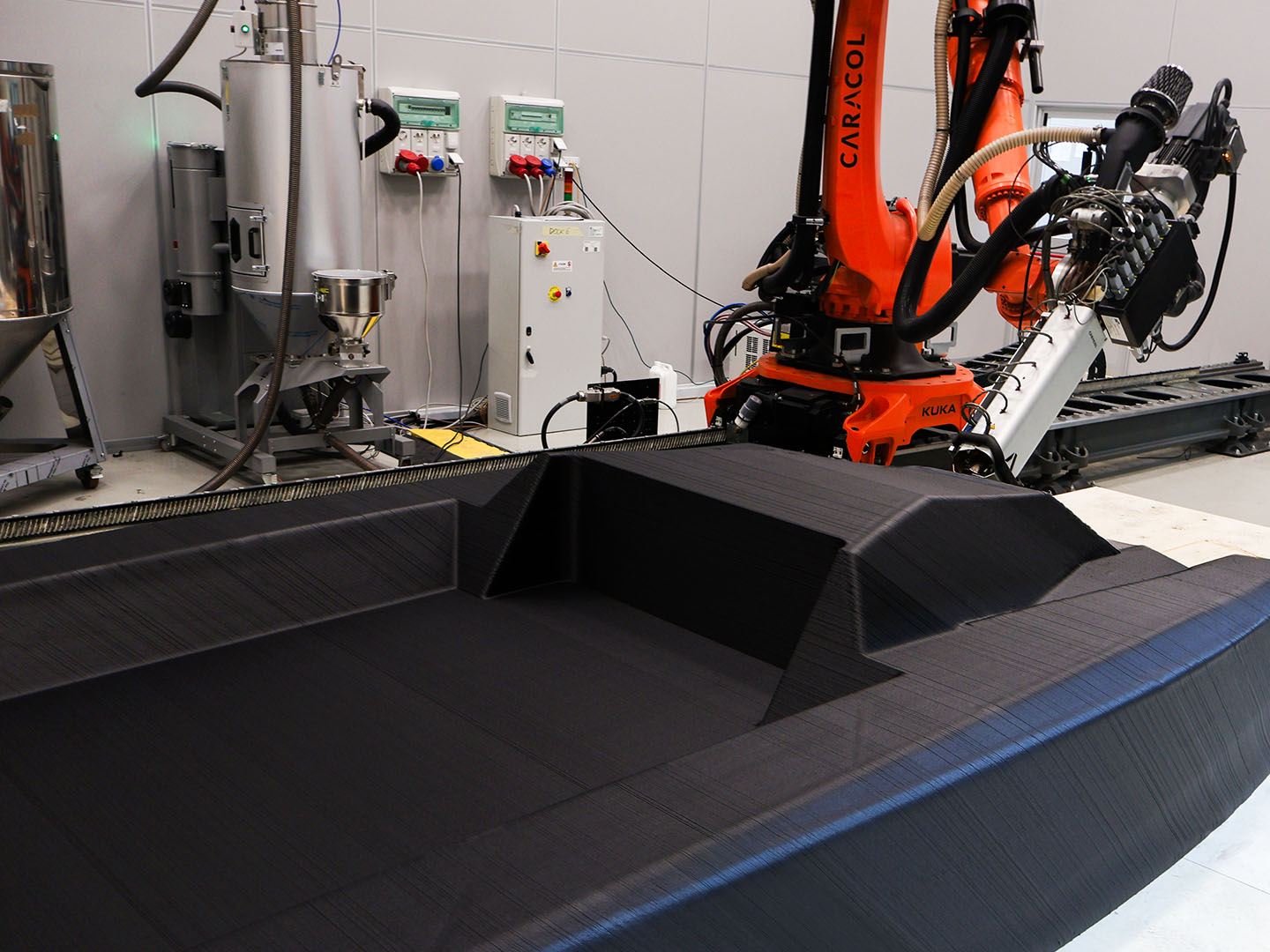
Marine drone, produced with Mirai
On the water, a heavy hull means less range, so weight was the first thing Mirai had to fight. They printed this drone with robotic LFAM in a fiber-reinforced material, light but stiff enough to take the waves. The shape came straight from the file, and the next one can change without anyone having to build a new mold first.
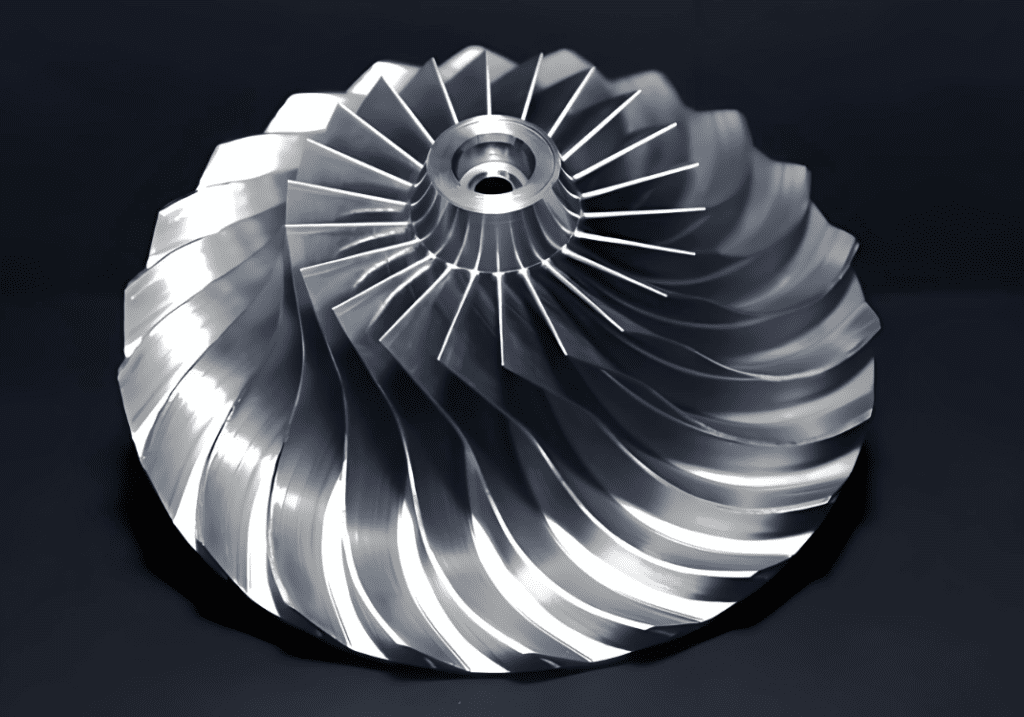
Impeller, developed for MTC
Look closely at the blades and you can still guess the layers. This impeller was made with MTC leveraging Vipra AM WAAM process, deposited in metal until it was almost the finished part. Starting that close to the final shape means far less material ends up as chips on the floor, and nobody has to wait weeks for a foundry.
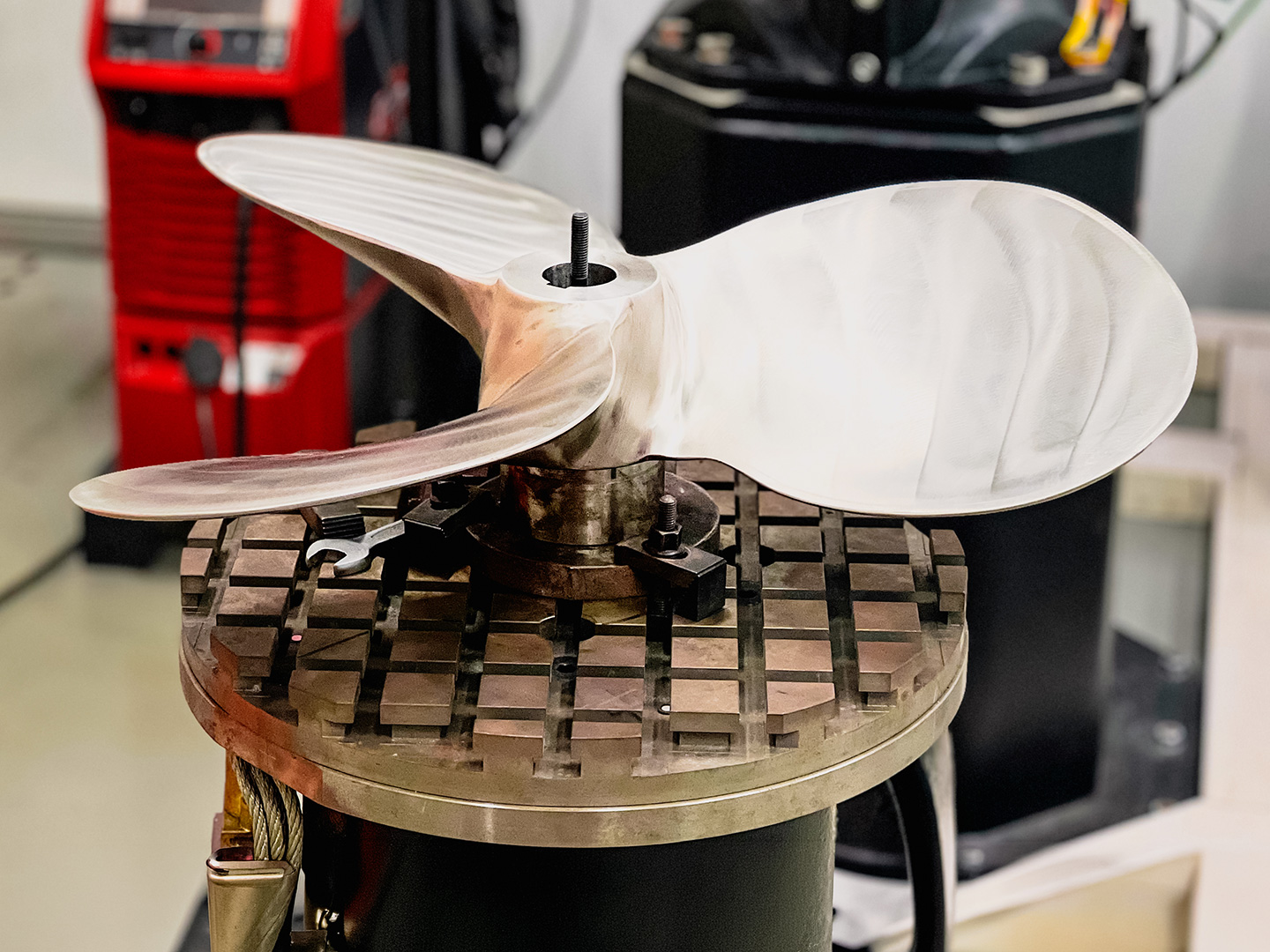
Marine propeller by JOME Engineering
The client had the old propeller and nothing else, no drawings, no CAD. So JOME scanned it and printed a new one in SS316L on Vipra AM, in Dubai, a short trip from the boat it went back on. Skipping the die and the foundry took roughly 60% off the lead time and about 40% off the cost.

Direct mold for carbon fiber lamination
In motorsport, carbon parts change almost every season, and every change used to mean a new mold, plus the master needed to make it. This one skips that step. Printed with robotic LFAM in a high-performance composite, then machined to the right finish, it goes straight to lamination. Fewer stages, much less waiting, and when the design moves on, so does the mold.
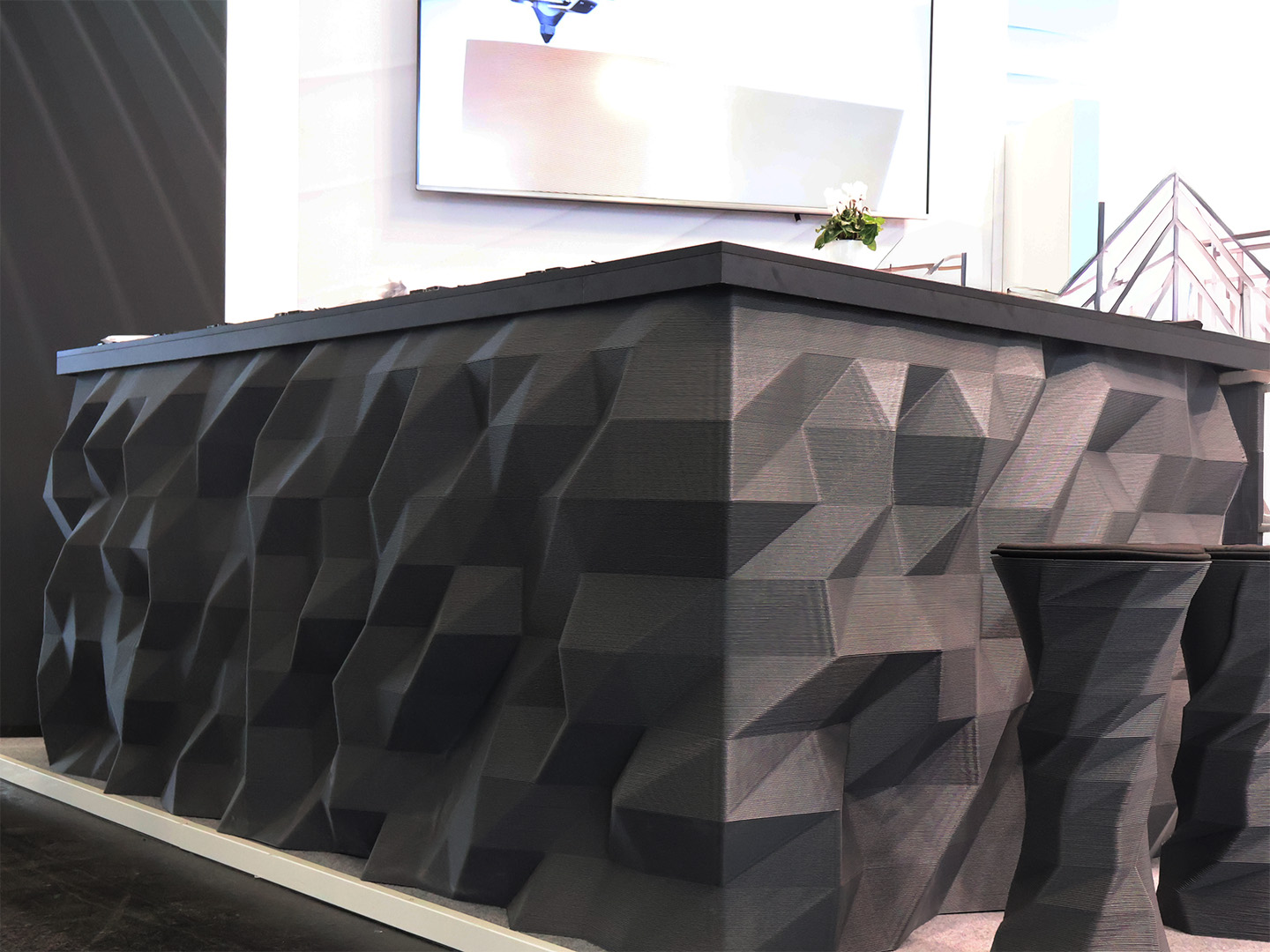
The 3D Bar
Run a hand along the counter and there isn’t a straight edge anywhere. That’s the whole point of this bar, a completely custom piece printed with robotic LFAM, big curves and all. Building something like this by hand would need molds for every section. Here it took a file and a robot, and it can be printed again whenever someone wants a different version.
Join us at Caracol's booth

Booth C129 – Hall 12.1
November 17 – 20, 2026 | Messe Frankfurt – Germany
Caracol’s Robotic technologies
Come see our robotic technologies in action at Booth C129 and explore the future of large-scale advanced manufacturing.
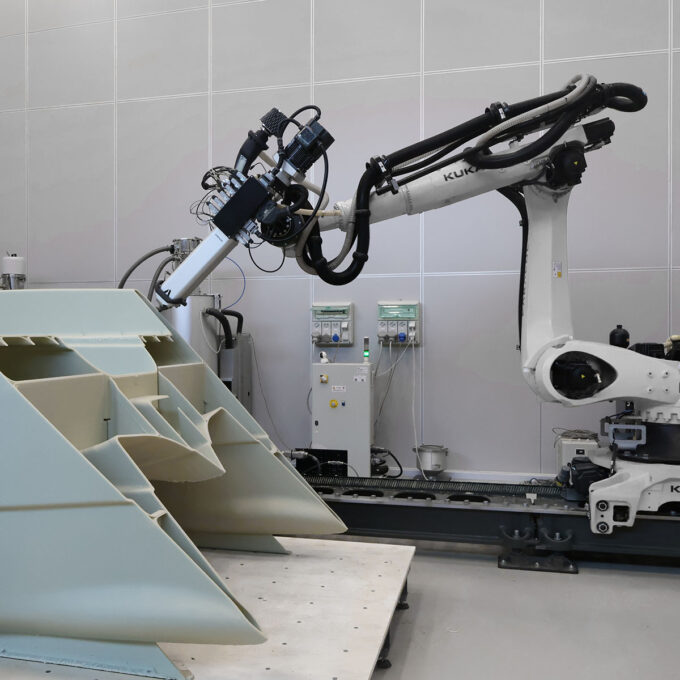
Composite Additive Manufacturing
Heron AM
Flexible, large-scale production of high-performance composite and thermoplastic parts through 6+ axis robotic extrusion.
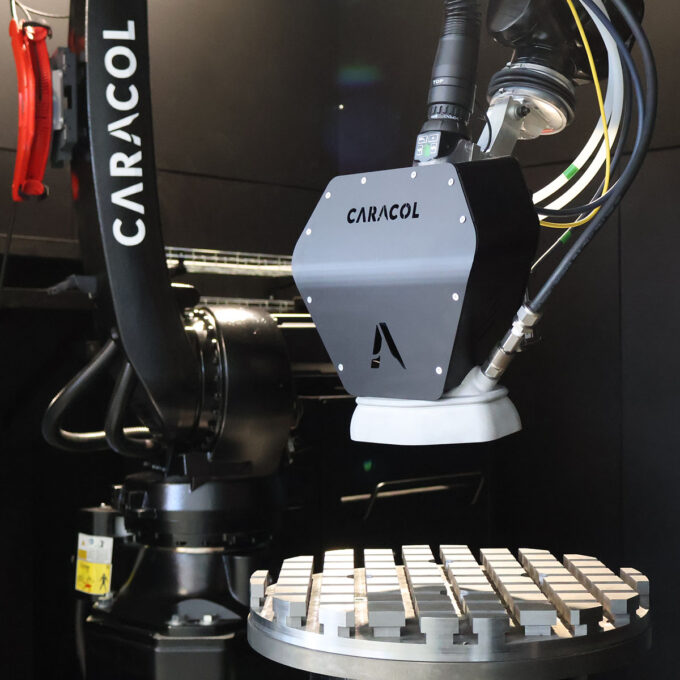
Metal Additive Manufacturing
Vipra AM
Efficient, automated production of industrial-grade, structural metal parts through robotic wire arc deposition.
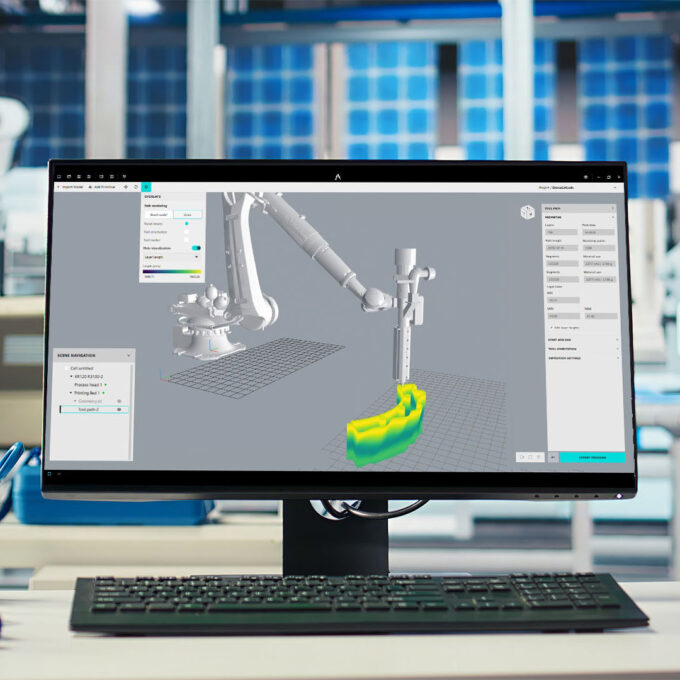
Software for Robotic Manufacturing
Eidos Manufacturing
Plan toolpaths, monitor production, and control quality in real time, all from one software suite integrated with Heron AM and Vipra AM.
Live at the Caracol stand
Over two days at Formnext we're hosting at Booth C129 a series of short talks on advanced manufacturing, with the partners who make our manufacturing network work in practice.
The Network Effect
Tuesday 17 November · h 16:00
A conversation across industries that rarely share a stage. Moderated by Francesco De Stefano, CEO & Co-founder at Caracol AM, the panel looks at what happens when production moves into a network of connected microfactories: how it reshapes the way things get made, sold and scaled, and where the model still has room to grow.
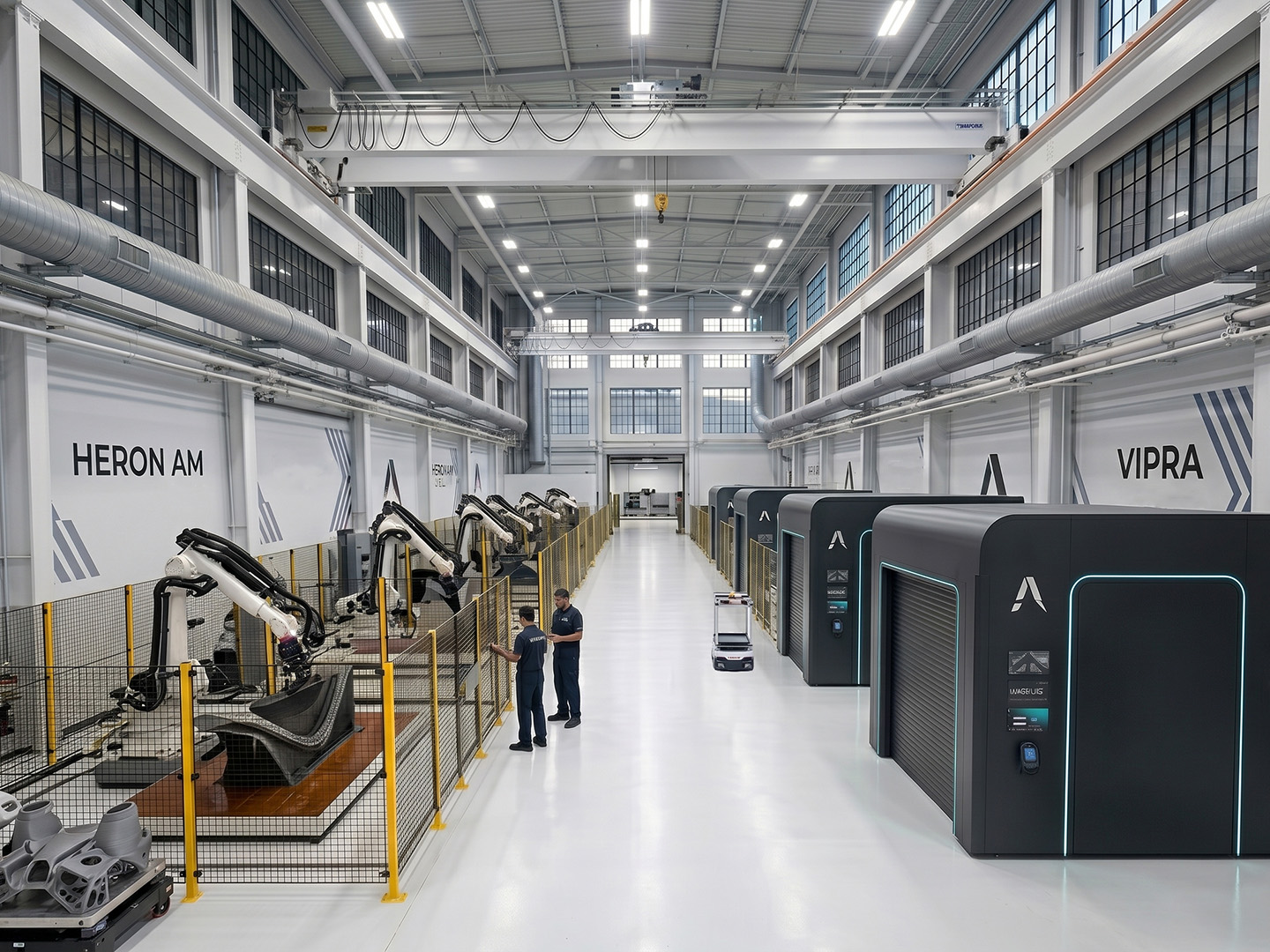
Inside a microfactory
Wednesday 18 November - Morning
One of the largest LFAM microfactories out there, with robotic cells printing production parts day in, day out. The team behind it walks through how it grew from a first concept into a real factory, including a few decisions they’d make differently today.
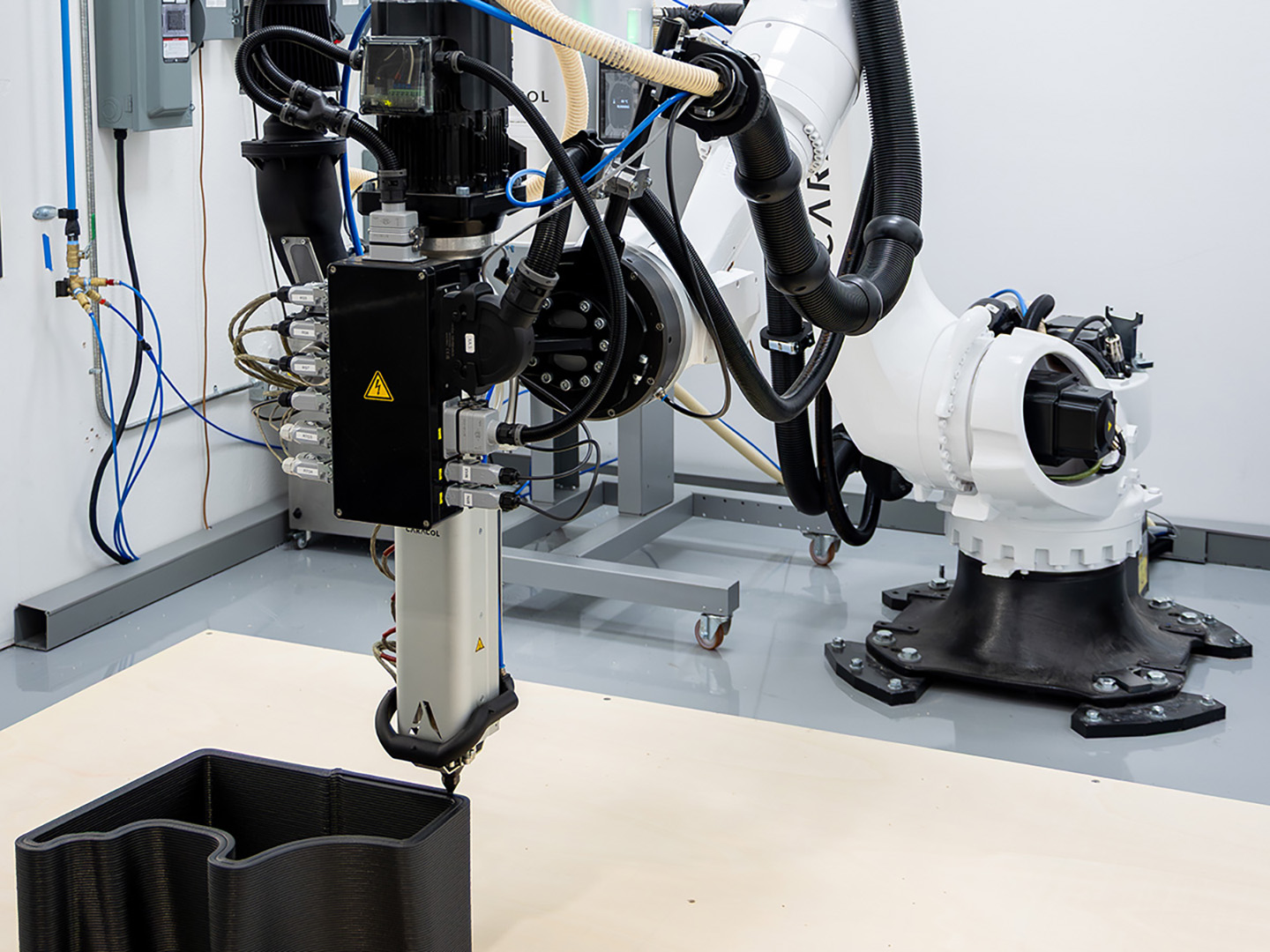
Scaling without building everything yourself
Wednesday 18 November - Morning
A clear market, products that already sell. The harder question is how to expand without opening every new factory on your own. Producing closer to clients, with partners who work to the same standards, turns out to be a big part of the answer.

From idea to application
Wednesday 18 November - Afternoon
Between a promising prototype and a part you can produce in volume there’s a lot of testing, validation and the occasional dead end. This session sits right in that gap, with real examples of applications that made it through, and some that didn’t.

When parts have to last
Thursday 19 November - Afternoon
Certifications, safety requirements, components expected to stay in service for decades. In regulated sectors like rail, additive parts have to earn their place. A concrete talk on what it really takes to get printed components approved and in use.
SCHEDULE YOUR MEETING WITH US
Request a meeting with our experts
Bring us your production challenge. At Formnext (Booth C129, Hall 12.1), our team will show you how robotic AM for composites and metals can solve it.