




 Press release
 Greenland Arctic Development Corp Acquires Caracol Heron 400 to Advance Local Manufacturing in Greenland

Date: 14 Oct, 2026
Greenland Arctic Development Corp Acquires Caracol Heron 400 to Advance Local Manufacturing in Greenland
Date: 14 Oct, 2026
Equipment will be commissioned in Chicago before deployment to Greenland as the foundation of a locally operated manufacturing joint venture
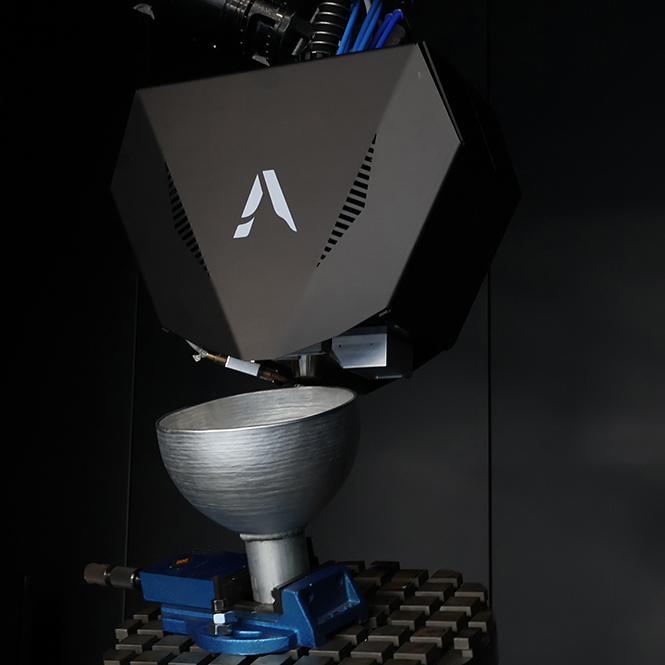
CHICAGO and NUUK, Greenland – September 29, 2026 – Greenland Arctic Development Corp (“GADC”) and Caracol, an advanced manufacturing company based in Austin, Texas, today announced that GADC has purchased a Caracol Heron 400 system, an industrial robotic platform designed to additively produce large polymer and composite components. The system will initially be installed and tested in Chicago before being deployed to Greenland. The Heron 400 uses a six-plus-axis robotic arm that travels along a rail of configurable length. Material is fed from a dedicated preparation and drying chamber to the extruder mounted on the arm. The robotic arm has a reach of approximately four meters, while the rail enables more than 10 meters of X-axis printing.
The printer’s multiple axes enable advanced manufacturing techniques that address several limitations of traditional three-axis printing. Greater control of overhanging surfaces can reduce the need for supports and related material waste, while non-planar toolpaths can help mitigate interlayer weakness and anisotropy. This allows complex shapes to be produced with limited waste and greater structural efficiency than conventional three-axis additive manufacturing.
The Heron 400 can process a broad range of thermoplastics and fiber-reinforced composites, each offering different performance characteristics for different applications. In remote environments, where access to specialized materials and replacement parts can be constrained, this material flexibility creates more ways to manufacture a needed component by changing the feedstock rather than the production system.
Additive manufacturing is particularly well suited to environments where variability and unpredictable demand are facts of life. Many conventional manufacturing methods require expensive molds, substantial labor and excess material, costs that can quickly exceed the value of a limited-run part. Additive manufacturing allows a wide variety of shapes to be produced from polymer and composite materials without much of the tooling, lead time and waste associated with traditional techniques.
The project reflects a broader shift toward shorter, more resilient supply chains. Disruptions and long lead times have pushed companies and governments to bring production closer to where products are used. Robotic additive manufacturing makes this practical even in remote locations: designs travel as digital files, and a single, reconfigurable production cell can make many different parts on demand, instead of relying on a dedicated factory, tooling and a long shipping route for each product.
GADC intends to use the equipment to establish a new model for local manufacturing in Greenland. The company plans to recruit a Greenlandic entrepreneur who will receive technical training and the opportunity to develop and operate a joint venture manufacturing facility using the Caracol system.
Large-format additive manufacturing can produce durable, customized components without many of the costs and delays associated with traditional manufacturing and long-distance shipping. Potential applications in Greenland include locally produced furniture, marine components, replacement parts for boats, ATVs and snowmobiles, construction elements, industrial components and other products tailored to Arctic conditions. Caracol systems already produce comparable components for customers in Europe and North America across the aerospace, maritime, energy and construction sectors, from molds and tooling to structural parts and concrete formworks.
The facility is expected to support Greenland’s growing natural-resource, infrastructure and tourism sectors while also using its available production capacity to address the everyday needs of Greenlandic businesses, communities and consumers.
“Outside investment can bring substantial economic activity to Greenland, particularly through natural-resource exploration and infrastructure development, but the lasting value will come from building capabilities that remain in Greenland,” said Larry G. Swets Jr., Chairman of Greenland Arctic Development Corp. “By combining advanced manufacturing equipment with local training, education and entrepreneurship, we can create skilled jobs and productive capacity that support major development projects while also serving the practical needs of Greenlandic communities. Our goal is not simply to bring a machine to Greenland – it is to help build a locally led business around it.”
“For decades, production has been concentrated in a few large industrial hubs, and remote regions have paid for it in shipping costs and long waits for parts,” said Francesco Pantaleone, Head of Sales, Americas, at Caracol. “Robotic large-format additive manufacturing makes a different model possible: a flexible production cell that turns digital designs into boat components, construction elements or furniture where they are needed, in the quantities needed. Greenland is one of the most demanding places to prove that model, and we are proud to support GADC and its local partners in building a business around it.”
Testing and commissioning in Chicago will allow GADC and its partners to evaluate materials, production methods and potential Arctic applications before the system is transported to Greenland. The initial program will also help establish the training, operating and commercial framework for the proposed joint venture.
GADC expects to work with local stakeholders to identify an entrepreneurial partner and determine the most appropriate location for the Greenland manufacturing facility. Additional details regarding the deployment, training program and joint venture will be announced as plans are finalized.


Who We Are
Build beyond possible
Born from the idea of pushing the limits of 3D printing beyond what was possible, Caracol offers Large Format Additive Manufacturing solutions for advanced industries.
Meet Caracol
